Sikkim Permits for Indians, Foreigners and OCI Holders
Who can go where in Sikkim, which ID Indian travellers send, how foreign nationals and OCI card holders get the entry permit, and what the operator does after you book.
The short answer
After you book, the operator applies for your permit. Foreign nationals and OCI card holders also need Sikkim’s entry permit, and can visit fewer places than Indian travellers.
- Indian travellers send a Voter ID, passport or driving licence (not Aadhaar) and a passport-size photo for each person, by the cut-off on the day’s page, usually the afternoon before.
- Foreign nationals and OCI card holders need the free entry permit (RAP, often called the ILP), and for Tsomgo Lake or the north, a group of at least two with a registered guide.
- They can visit Tsomgo Lake, Lachung and Yumthang, and Lachen as far as Thangu. Baba Mandir, Nathula, Zuluk and Gurudongmar are for Indian nationals only.
- On the day, carry the same document you sent. A different one is the mistake operators see most.
Days you can book for this
Add every traveller’s details as soon as you book: permits are applied for the day before you travel.
Quick facts
Checked Oct 2026
- Who applies
- The operator, after you book
- Indian ID
- Voter ID, passport or driving licence; not Aadhaar
- Send by
- The cut-off on the day’s page, usually the afternoon before
- Entry permit
- Foreign nationals and OCI: RAP, free, apply online 15 days ahead
- Foreigners can go
- Tsomgo Lake; Lachung and Yumthang; Lachen to Thangu
- Foreign groups
- Two or more, with a registered guide
Who can go where in Sikkim?
Indian nationals can visit every area here, with a permit where one is needed. Foreign nationals and OCI card holders can visit Tsomgo Lake, Lachung and Yumthang, and Lachen as far as Thangu.
These lists follow Sikkim Tourism’s two permit pages and what operators who run these days report, as of October 2026. Indian nationals can visit every place in both lists, with a permit everywhere except Gangtok’s own sights. OCI card holders follow the same rules as foreign nationals.
Open to foreign nationals and OCI card holders too
- Gangtok’s own sights: for foreign nationals, the entry permit (RAP) only
- Tsomgo (Changu) Lake: for foreign nationals, two or more, with a registered guide
- Lachung and Yumthang: for foreign nationals, two or more, with a registered guide
- Lachen, as far as Thangu: for foreign nationals, two or more, with a registered guide
Indian nationals only
- Baba Mandir
- Nathula (closed on Mondays)
- Zuluk
- Gurudongmar Lake
- Zero Point and Katao (operators say)
Each place has a day you can book, and each day’s page says who can book it:
- Tsomgo Lake and Baba Mandir: the private day for Indian nationals, or the Tsomgo Lake day for foreign nationals, with a registered guide.
- Nathula: the shared day, or the Nathula add-on on the private day. Open days and papers are in the Nathula permit guide.
- Zuluk: the Zuluk and Rongli day, for Indian nationals.
- Lachung and Yumthang: the two-night private trip.
- Lachen and Gurudongmar: the three-night Lachen and Lachung trip, for Indian nationals.
- Gangtok: every day you can book from Gangtok.
How do Indian travellers get a permit?
The operator applies for it after you book. It needs each traveller’s ID and a passport-size photo by the cut-off on the day’s page, usually the afternoon before.
It works the same way for every area on these days: Tsomgo Lake and Baba Mandir, Nathula, Zuluk and Rongli, and North Sikkim. Add every traveller’s name, date of birth and ID number to your booking by the listing’s cut-off; the operator collects the documents and photos after you book.
- Adults: a Voter ID, passport or driving licence. Aadhaar is not accepted.
- A passport-size photo of every traveller. Sikkim Tourism asks for two for Nathula, Zuluk and Gurudongmar, so keep a spare.
- Children: a birth certificate or school ID. Sikkim Tourism also names a passport or the father’s Voter ID.
- A child travelling without their parents: the parents’ documents as well as the child’s own.
Phone photos of the documents are fine to send; you don’t need printouts. On the day, carry the same documents you sent, and a passport-size photo of each traveller.
On the private Tsomgo Lake and Baba Mandir day, the operator applies for the lake permit from those details, and for the Nathula permit too if you add Nathula at checkout.
A day you can book
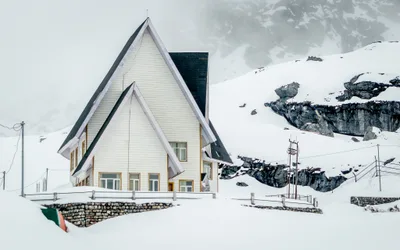 Gangtok, SikkimTsomgo Lake & Baba Mandir Day trip with Optional Nathula PassFull daypickup inclrefundable 24hfrom $41per vehicle, all-inSee the day →
How do foreign nationals get the entry permit?
Apply online for the Restricted Area Permit (RAP, often called the ILP) at least 15 days before you reach Sikkim. It is free and valid for 30 days.
Sikkim Tourism says every foreign national needs it to enter Sikkim, Gangtok included, except people of Bhutanese origin. It can be extended, up to 60 days in all.
Apply through e-FRRO, the Government of India’s portal for foreign nationals. The Government of India says these permits are now issued online, with no paper permits, and asks foreign nationals to apply at least 15 days ahead if they already live in India, and to have any approvals they need at least 30 days before they visit. Operators say to allow the same 15 days.
You’ll need your passport with a valid visa, or your OCI card, and a passport-size photo. Keep the permit with your passport: the operator needs a copy of it to apply for the protected-area permit for your day.
Sikkim Tourism says citizens of Nepal and Bangladesh may apply with a valid identity card instead of a passport. For Nepali citizens, operators say that is the citizenship certificate.
Where can foreign nationals go?
Tsomgo Lake in the east; in the north, Lachung and Yumthang, and Lachen as far as Thangu. They travel in a group of at least two, with a registered guide.
On the road from Gangtok, Sikkim Tourism allows foreign tourists as far as Tsomgo Lake. Baba Mandir and Nathula, further up the same road, and Zuluk are for Indian nationals only.
Two rules come with the permit: a group of at least two foreign nationals, and a professional guide registered with the Government of Sikkim. Sikkim Tourism’s pages set out the group of two, and the guide for the north; operators say the guide is a government rule at Tsomgo Lake too.
The operator applies for this permit after you book, so send your documents at least a day before: a passport copy, your visa, a passport-size photo and your entry permit. OCI card holders send their OCI card too. Carry the originals on the day.
The Tsomgo Lake day for foreign nationals has a registered guide with you all day, and takes bookings of two or more. Its operator applies for the lake permit from the documents you send.
A day you can book
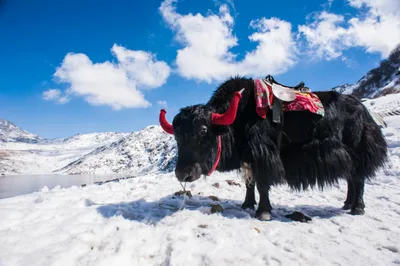 Gangtok, SikkimTsomgo (Changu) Lake Day Trip for Foreign Nationals with Registered GuideFull daypickup inclrefundable 24hfrom $68all-inSee the day →
Travelling with Indian family or friends?
Yes: operators say Indian travellers can share one car with foreign friends. At least two foreign nationals must travel in it with a registered guide, and the whole car then stops at Tsomgo Lake, since foreign nationals can’t go on to Baba Mandir or Nathula.
What do you need for North Sikkim?
Indian travellers send the same ID and photo as anywhere else. Foreign nationals need a group of two, a registered guide and a stay of at least two nights.
The operator applies for North Sikkim permits for Indian travellers too, from the details you add to your booking.
Foreign nationals can visit Lachung and Yumthang, and Lachen as far as Thangu. Sikkim Tourism issues their North Sikkim permits for 3 days and 2 nights up to 5 days and 4 nights, with a registered guide. Operators say foreign nationals stop at Yumthang and don’t go on to Zero Point or Katao.
Gurudongmar Lake, beyond Thangu, is for Indian nationals only. The three-night Lachen and Lachung trip is listed for Indian nationals; its listing doesn’t recommend Gurudongmar for children under 5.
The two-night private trip goes to Lachung and Yumthang, and foreign nationals can book it too, as a group of at least two. Its price doesn’t include the registered guide they need, so foreign guests pay the guide separately to the operator. Zero Point and Katao are for Indian nationals only.
Registered guide for foreign nationals on the two-night private Lachung and Yumthang trip: ₹2,500 per day, paid separately to the operator · checked Oct 2026
A day you can book
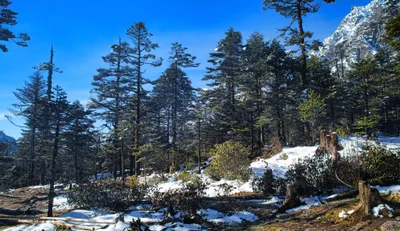 Gangtok, Sikkim2 Night Private Cab Trip to Lachung & Yumthang Valley from GangtokMulti-daypickup inclrefundable 24hfrom $197per vehicle, all-inSee the day →
What about OCI card holders?
OCI card holders follow the rules for foreign nationals: they need the entry permit, and can go only where foreign nationals can.
The Ministry of Home Affairs’ 2021 notification on OCI card holders requires a special permit for any protected or restricted area, so OCI card holders apply as foreign nationals do. Baba Mandir, Nathula, Zuluk and Gurudongmar are closed to them, as to other foreign nationals.
For the entry permit, show your passport and OCI card. For Tsomgo Lake or the north, send the OCI card with the other documents a foreign national sends.
Sikkim Tourism says some travellers need approval before they apply. Nationals and OCI card holders of Pakistan, Afghanistan or China (including Hong Kong and Macau), and people of Pakistani, Afghan or Chinese origin by birth, need the Ministry of Home Affairs’ prior approval. People born in, or nationals of, Myanmar or Nigeria need prior clearance.
What do permits cost, and what is changing?
As of October 2026, operators say Indian travellers pay no government fee for the Tsomgo Lake and North Sikkim permits themselves, and Sikkim Tourism says the entry permit is free. Foreign nationals’ protected-area permits do carry fees, and Nathula’s permit has a fee too.
The days listed here include the protected-area permit and its fees in their price, so there is nothing extra to pay for the permit on the day. A day’s price can also include other charges, such as a conservation fee; each day’s page lists what it includes.
Operators say the government plans to introduce permit fees for Tsomgo Lake and North Sikkim, possibly from 15 November 2026. As of October 2026 they are planned, not yet in force.
More permits are moving online. Sikkim announced QR-code permits for its high-altitude areas in November 2025, and in August 2026 discussed an integrated online system for entry and protected-area permits. As of October 2026, operators still apply for permits as this guide describes.
What happens at the check post?
Operators say that once a permit is issued, a check post very rarely turns anyone back. What causes problems is a document that doesn’t match the one you sent.
Operators say the most common mistake is this: a traveller sends one ID for the permit, then arrives with a different one, or with the name spelled a little differently. The permit carries the details you sent, so carry exactly that document.
Indian travellers
- A Voter ID, passport or driving licence for each adult, not Aadhaar
- For each child: a birth certificate or school ID
- A passport-size photo of every traveller, and a spare
- Every traveller’s name, date of birth and ID number, added to your booking by the cut-off
- On the day: the same ID you sent
Foreign nationals and OCI card holders
- The entry permit (RAP), before you enter Sikkim
- A passport copy, and your visa or OCI card
- A passport-size photo of every traveller
- A group of at least two foreign nationals
- On the day: the originals of everything you sent
Questions travellers ask
Is Aadhaar accepted for Sikkim permits?
Where do foreign nationals get the Sikkim ILP?
Do OCI card holders need a permit for Sikkim?
Can a foreign national visit Tsomgo Lake alone?
Can an Indian family and foreign friends travel together?
Is there a fee for the Tsomgo Lake permit?
Sources & checks
- Who may visit which protected areas; the documents Indian travellers need, Aadhaar not accepted, and children’s papers; foreign nationals in groups of two or more — Sikkim Tourism, Government of Sikkim (Protected Area Permit page) · checked Oct 2026
- The entry permit (RAP): who needs it, free, 30 days and up to 60, the offices, the documents, citizens of Nepal and Bangladesh, places open on it alone, North Sikkim permit length and guide, and countries needing prior approval — Sikkim Tourism, Government of Sikkim (Restricted Area Permit page) · checked Oct 2026
- Entry and protected-area permits issued online through e-FRRO, with no paper permits; apply at least 15 days ahead if already living in India, approvals 30 days before a visit — Embassy of India, Bogotá (page updated 2 October 2026) · checked Oct 2026
- OCI card holders need a special permit for protected and restricted areas (Ministry of Home Affairs notification of 4 March 2021) — High Commission of India, Ottawa · checked Oct 2026
- Nathula: closed on Mondays — Incredible India, Ministry of Tourism, Government of India · checked Oct 2026
- QR-code permits for high-altitude areas announced (article of 24 November 2025) — Outlook Traveller · checked Oct 2026
- An integrated online system for entry and protected-area permits discussed (18 August 2026) — NewKerala · checked Oct 2026
- Who can book each day, the details each traveller adds after booking and by when, the IDs the days accept, the permit and other charges each day includes, and the registered guide on the Tsomgo Lake day for foreign nationals — The days' own listings on Day Trio · checked Oct 2026
- How the operator applies after booking; the cut-off and phone copies; photos for every traveller; children travelling with or without parents; the registered guide at Tsomgo Lake; what foreign nationals send and when; where the entry permit is easy to get; Nepali citizens; mixed groups; Zero Point and Katao; the check post and the most common mistake; fees now and planned — First-hand: the author and the local operators who run these days · checked Oct 2026