Does It Snow in Gangtok? Where to See Snow, Month by Month
Gangtok town almost never gets snow, but the roads above it do. Where to see snow near Gangtok, which months are surest, and what happens when snow closes the road.
The short answer
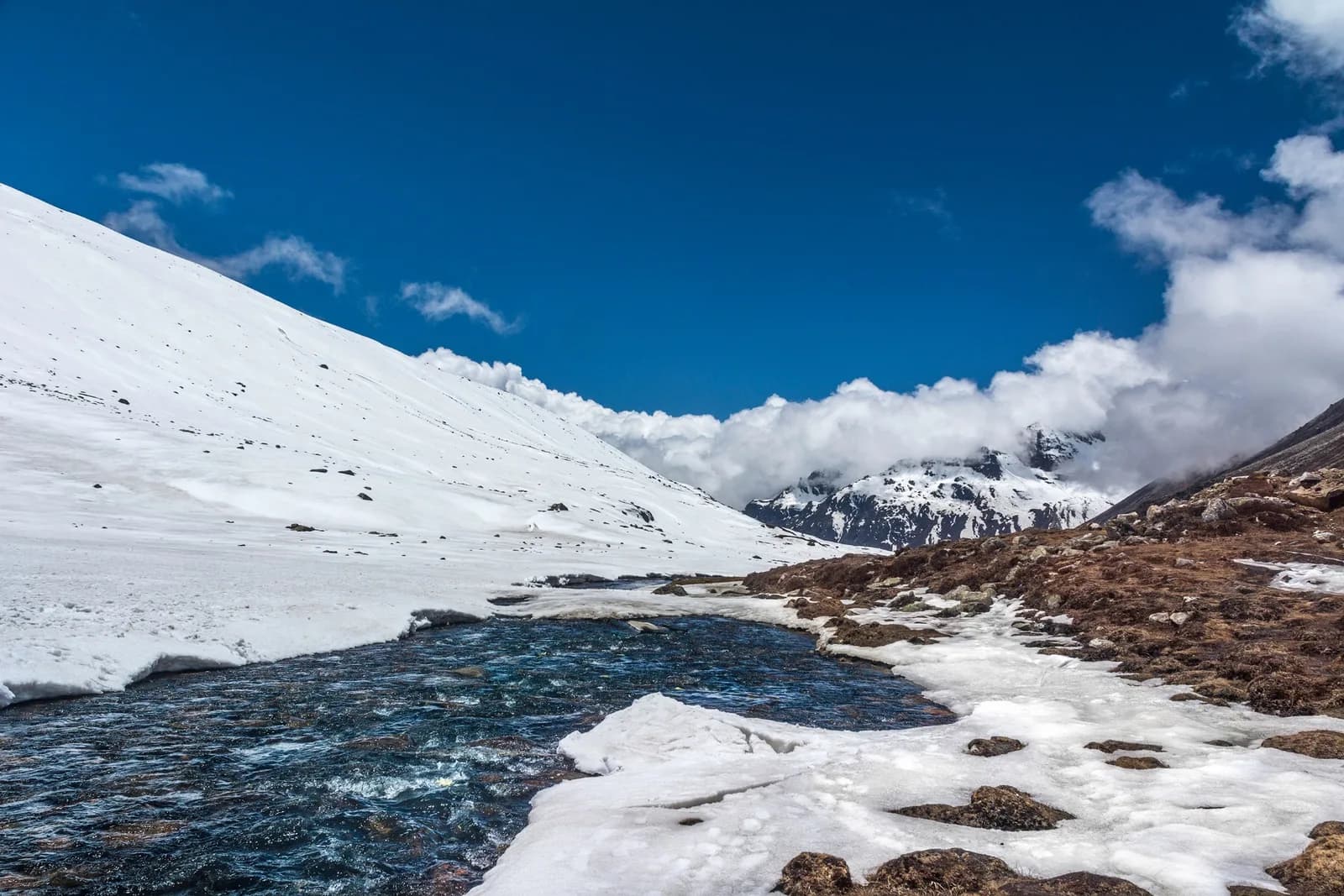
Gangtok town almost never gets snow; what visitors take for snow is usually hail. For snow, go up to Tsomgo Lake, Nathula, Kupup or Lachung, roughly December to April.
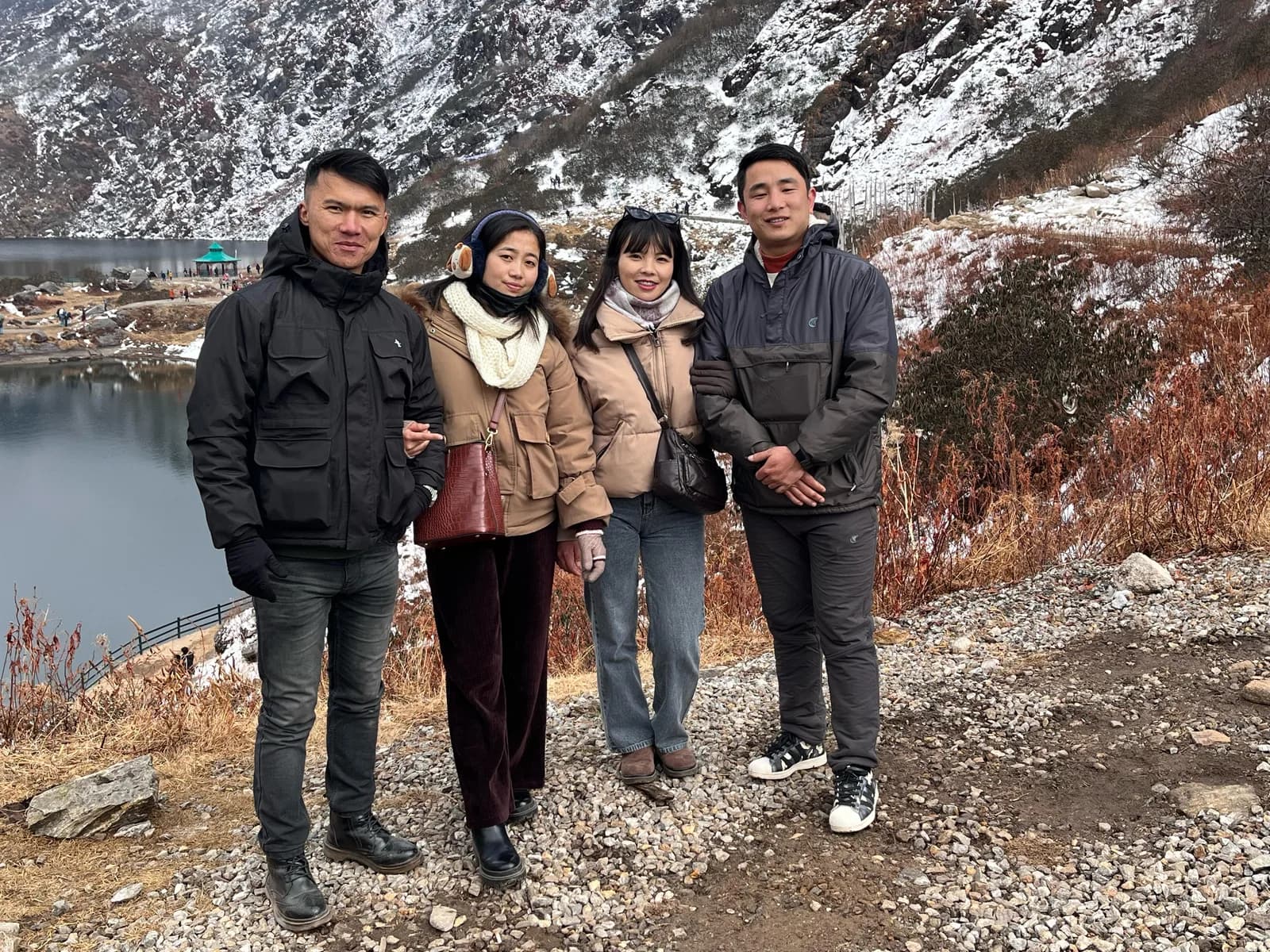
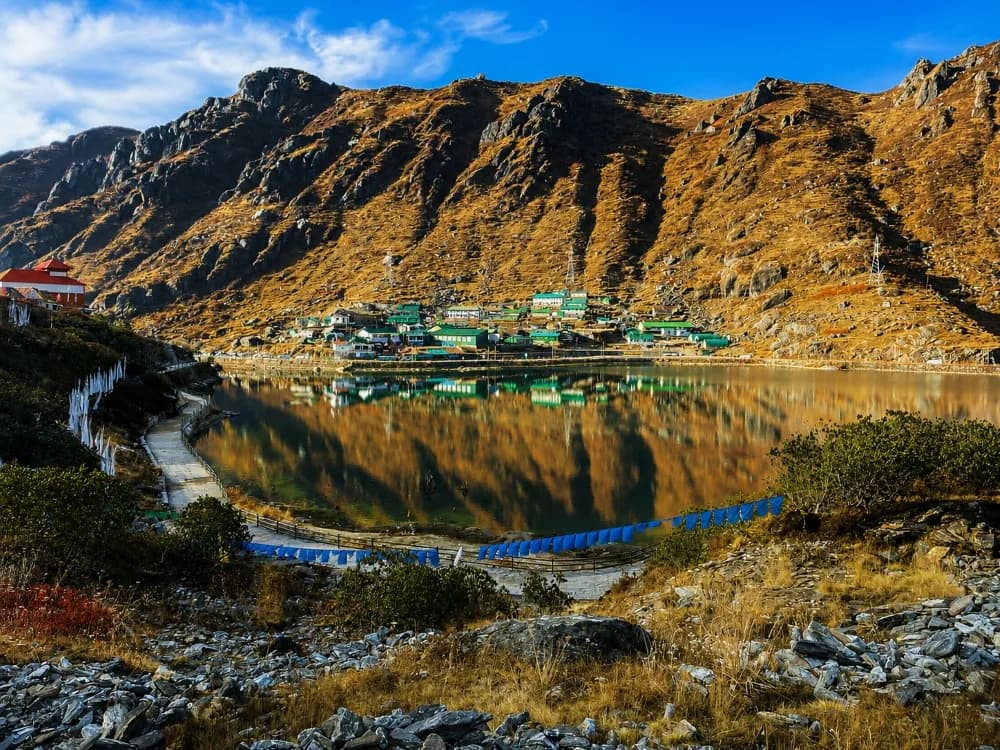
- Tsomgo Lake has snow from about December to April, and so do Baba Mandir and Nathula above it, which are for Indian nationals only. All three fit in one day out from Gangtok.
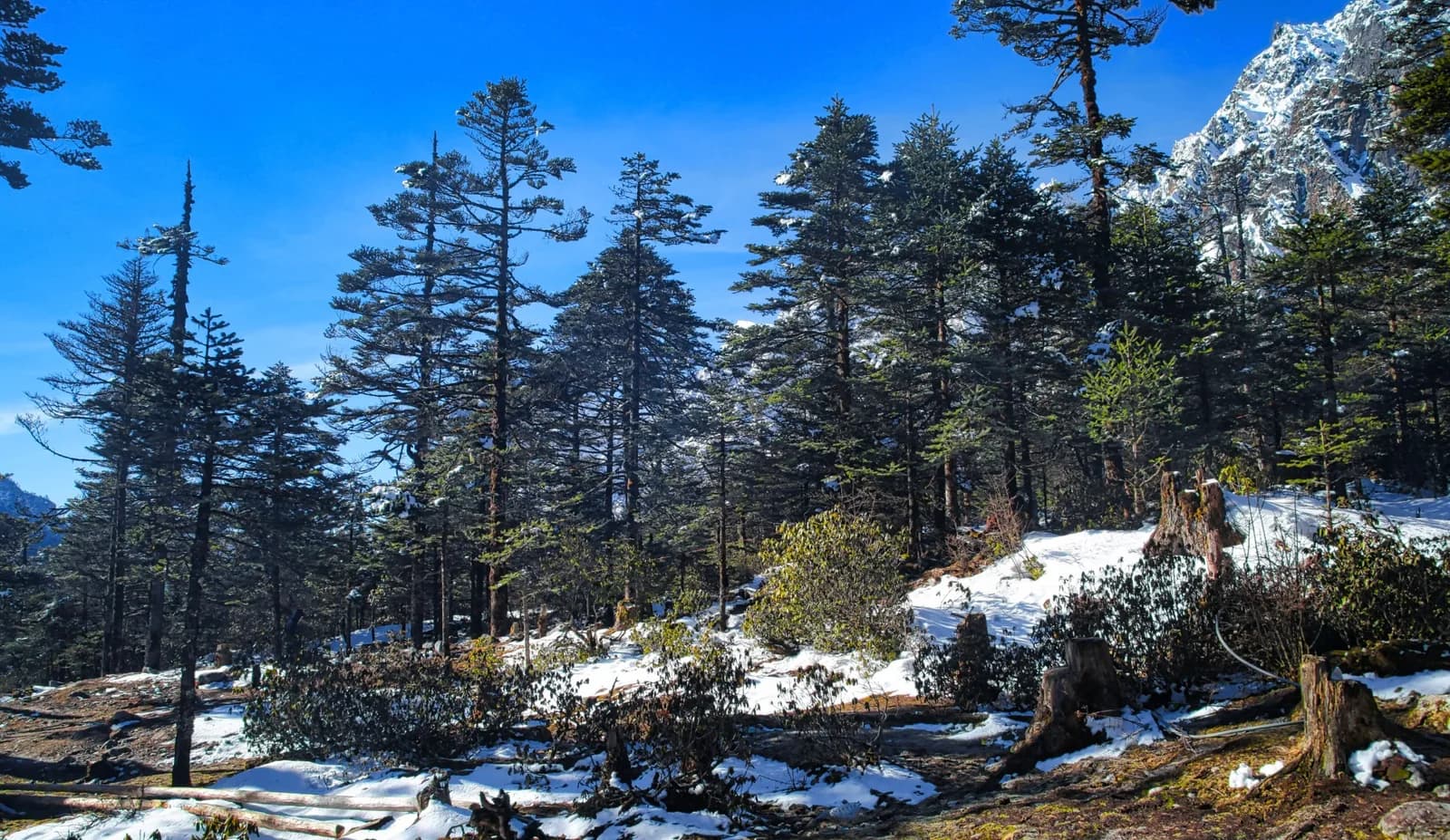
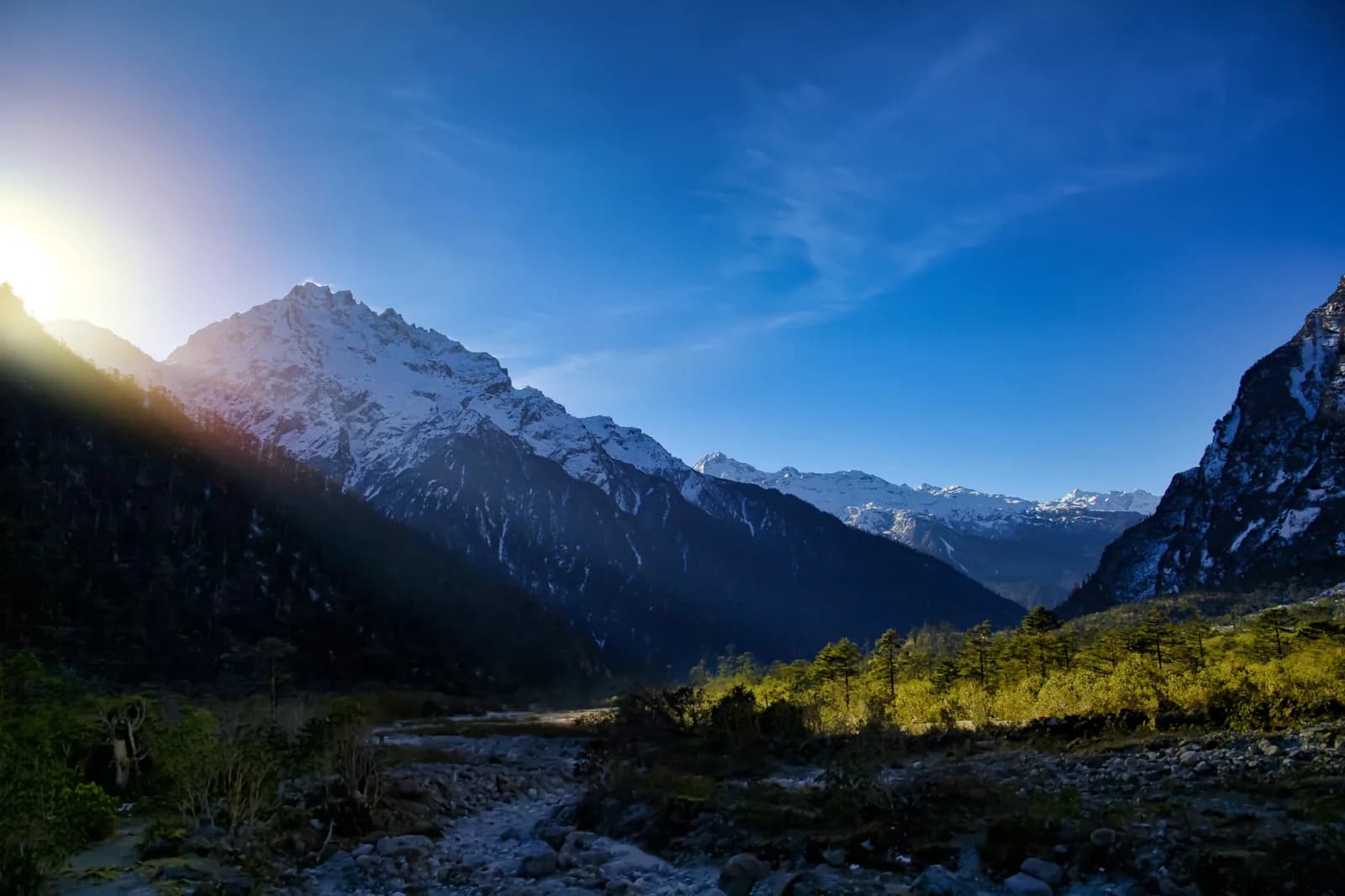
- Kupup, on the Zuluk day, has snow in the same months, as do Lachung and Yumthang. Zero Point, above Yumthang, can have it from November, sometimes October.
- For the best chance of snow, go in January, February or March. Operators say only heavy snow shuts the roads, usually for a day or two.
- Foreign nationals and OCI card holders can see it at Tsomgo Lake, and at Lachung and Yumthang (who can go where).
Days you can book for this
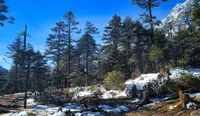
Put your snow day early in your stay: if heavy snow shuts the road on your date, there’s time to book another.
Quick facts
Checked Oct 2026
- Snow in town
- Almost never; hail is more common
- Snow season
- About December to April; surest January to March
- Where to see it
- Tsomgo (Changu) Lake, Baba Mandir, Nathula, Kupup, Lachung, Yumthang
- Snow for foreign nationals
- Tsomgo Lake; Lachung and Yumthang
- Road closures
- Only in heavy snow; usually a day or two (operators)
- Warm gear
- Hired at 17th Mile, on the road to Tsomgo Lake
Does it snow in Gangtok town?
Almost never. What visitors often take for snow in town is hail; the snow is higher up, on the roads out of Gangtok.
Winters in town are cool and mostly dry. The India Meteorological Department’s station in Gangtok, at 1,765 m, gives January, the coldest month, average lows of about 4.7 °C and highs of about 12.3 °C for 1981–2010, and December fewer than two rainy days.
Hail is another matter. The same records count it on two or three days a year, nearly all of them between March and May, and operators say guests often take hailstones for snow.
Operators say real snow in town comes only in an extreme winter, and then only a little, on the upper parts around Tashi View Point. On 5 January 2020, EastMojo reported light snow at Tashi View Point, Ganesh Tok, Chandmari and nearby areas.
Where can you see snow near Gangtok?
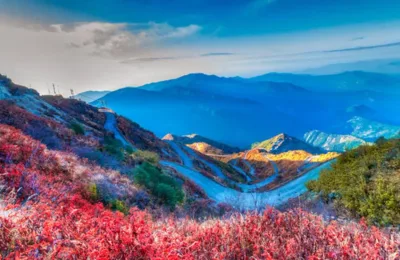
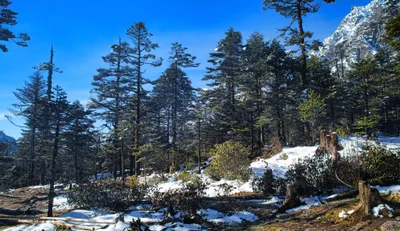
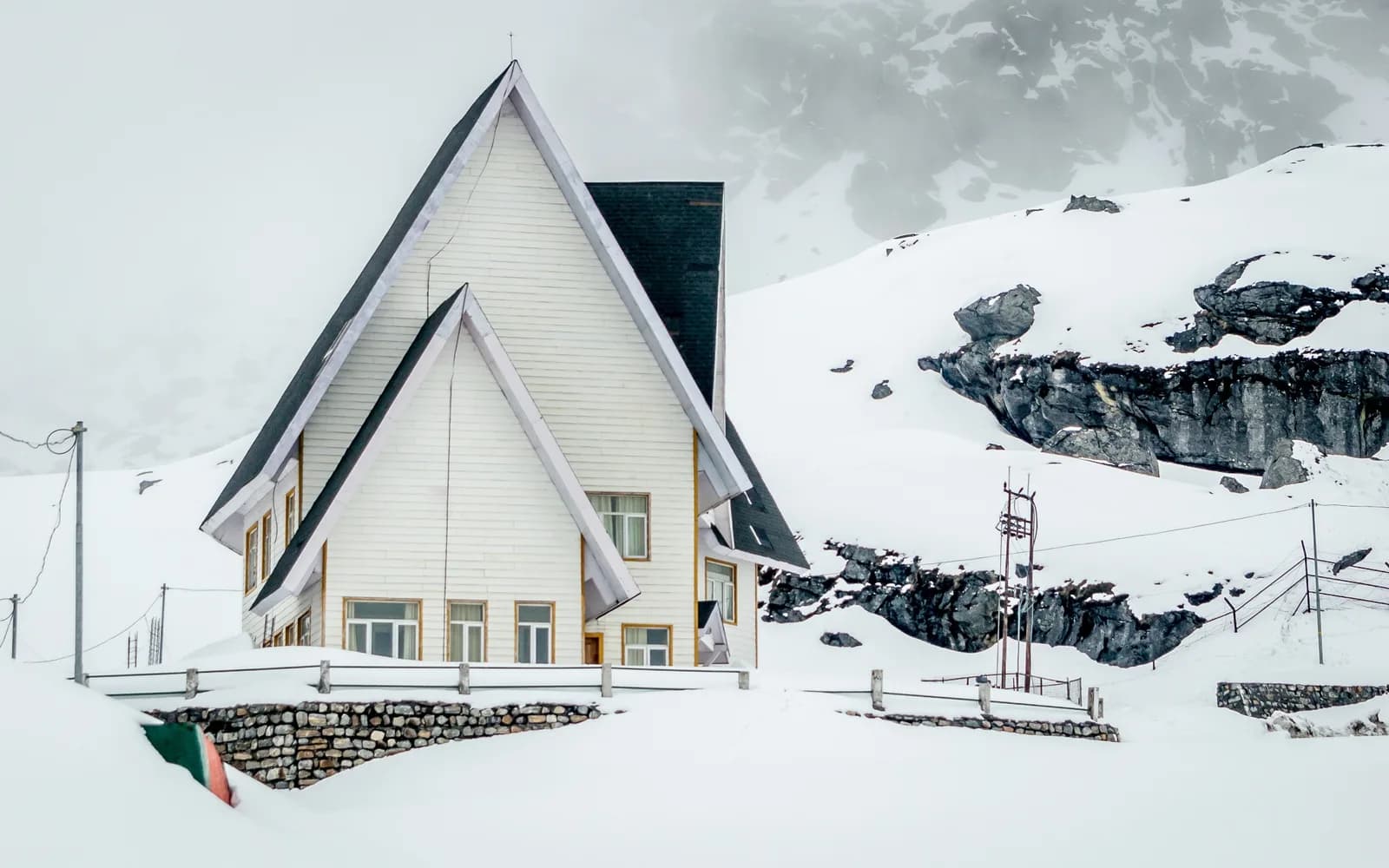
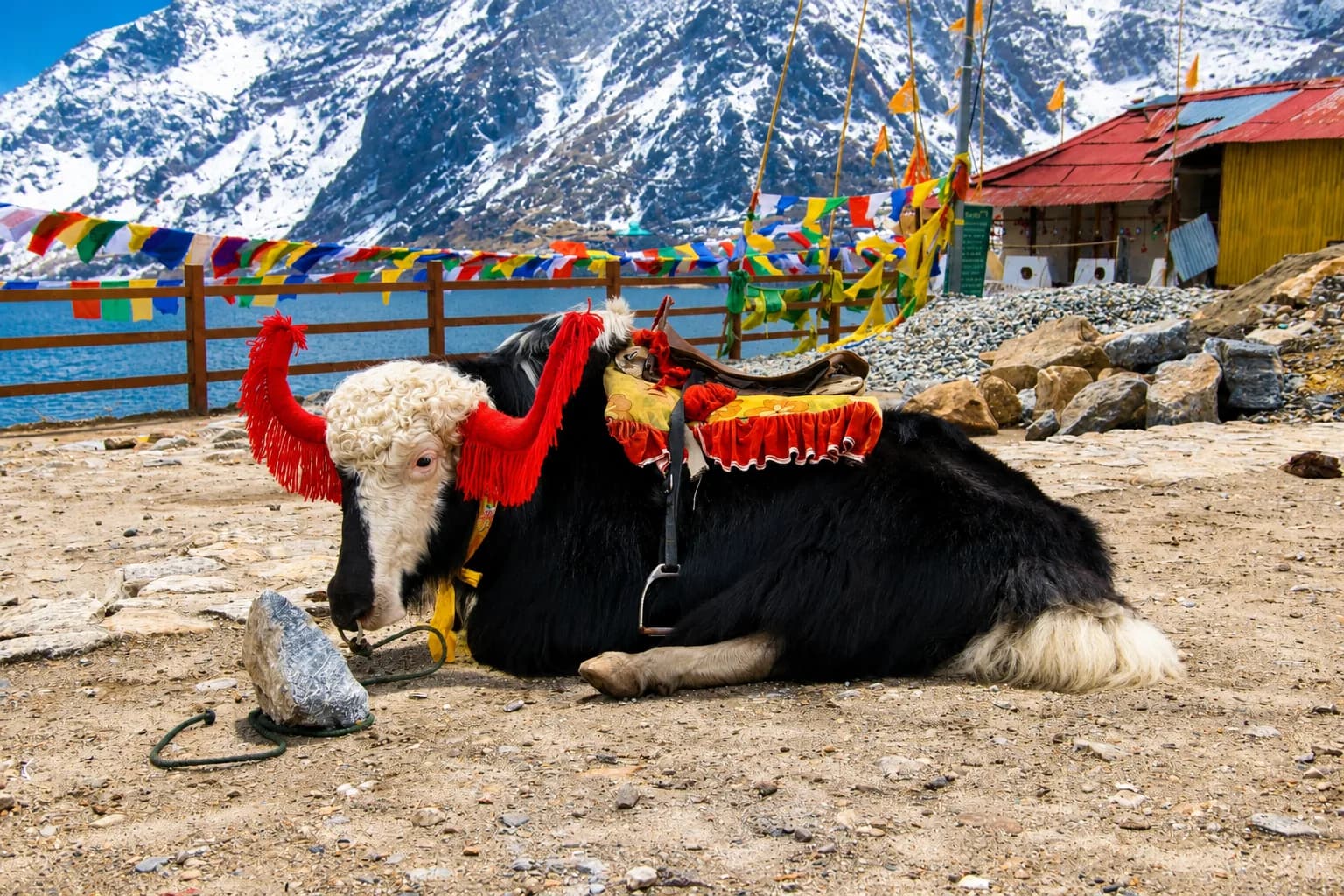
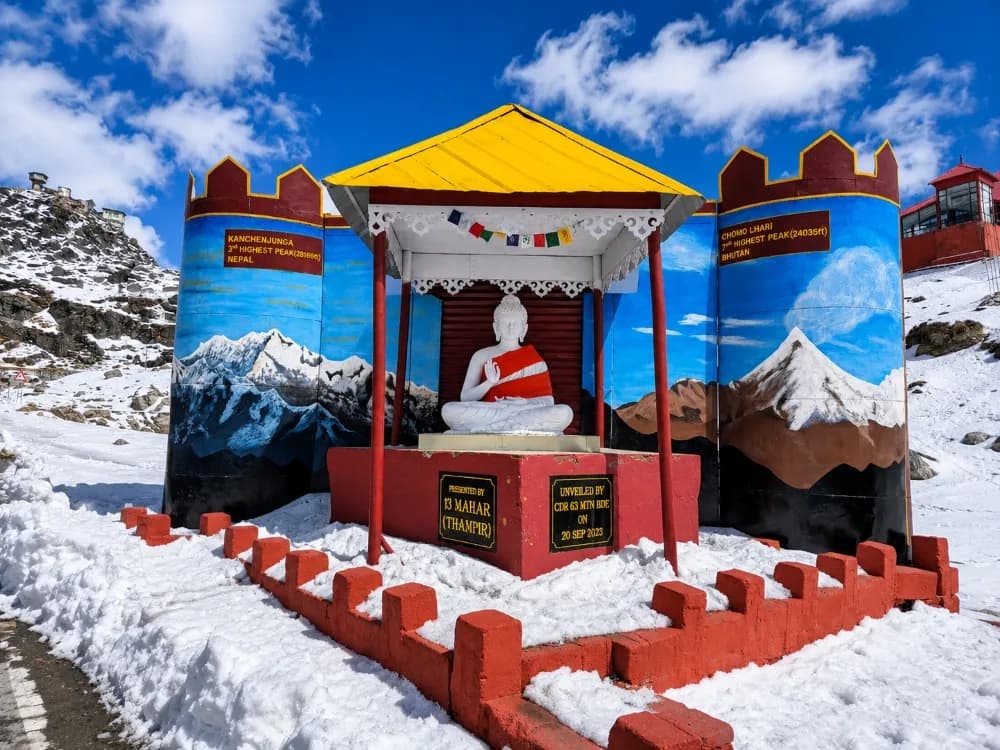
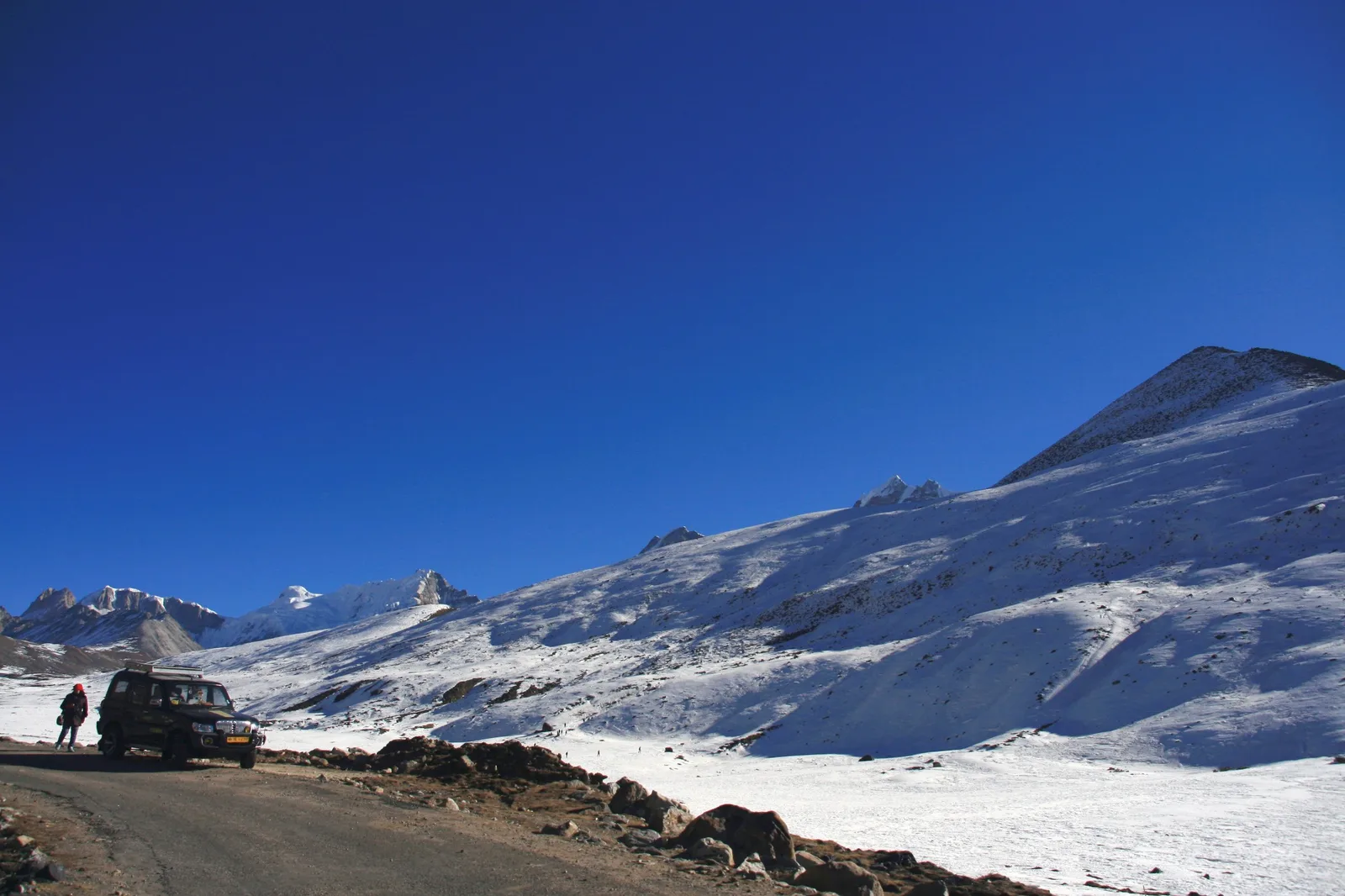
Higher up: at Tsomgo (Changu) Lake, at Baba Mandir and Nathula for Indian nationals, at Kupup on the Zuluk day, and in Lachung and Yumthang.
The snow months below are as the operators who run these days report them (October 2026). Who can go follows Sikkim’s permit rules, set out in the permits guide.
When there’s snow
- About December to April: Tsomgo Lake, Baba Mandir, Nathula, Kupup, Lachung and Yumthang
- Best chance: January to March
- Zero Point: from about November, sometimes October
- Gangtok town: almost never; a little on the upper parts in an extreme winter
Who can go
- Everyone: Gangtok town (foreign nationals with the entry permit)
- Foreign nationals too, two or more with a registered guide: Tsomgo Lake, Lachung and Yumthang
- Indian nationals only: Baba Mandir, Nathula, Kupup and Zuluk, and Zero Point (operators say)
OCI card holders follow the rules for foreign nationals. Each place has a day you can book:
- Tsomgo Lake and Baba Mandir: the private day, for Indian nationals, with Nathula as an add-on.
- Nathula: the shared day, which also stops at Baba Mandir and Tsomgo Lake.
- Tsomgo Lake, for foreign nationals: the Tsomgo Lake day for foreign nationals, with a registered guide.
- Kupup: the Zuluk and Rongli day, for Indian nationals.
- Lachung and Yumthang: the two-night private trip, or, for Indian nationals, the two-night shared homestay trip.
- Gangtok: every day you can book from Gangtok.
Kupup is the first stop on the Zuluk and Rongli day, which follows the Old Silk Route. Operators say it has snow in the same months as Tsomgo Lake.
The road to Tsomgo Lake climbs from Gangtok’s 1,765 m to 3,753 m at the lake and 4,310 m at Nathula. That height is why there is snow up there through the winter months while the town below almost never sees it.
The shared day takes in all three in one day: Nathula first, then Baba Mandir and Tsomgo Lake on the way back down.
A day you can book
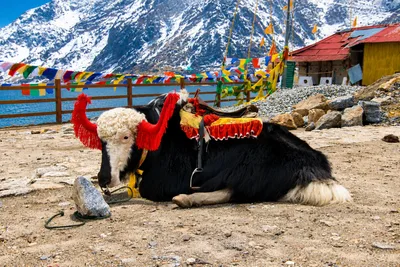 Gangtok, SikkimShared Trip to Nathula Pass, Tsomgo and Baba MandirFull daymeet in townrefundable 48hfrom $12per person, all-inSee the day →
Which month is best for snow?
January, February or March, if you want the best chance of it. December and April can have snow too, but less surely, and Zero Point can have it from November.
Operators who run these days say there is snow on the road to Tsomgo Lake, Baba Mandir and Nathula, at Kupup, and in Lachung and Yumthang from about December to April. The middle of that season, January to March, is when it is surest; at either end, in December and April, there may be snow, or there may not.
Zero Point, above Yumthang on the Lachung trips, gets its snow earlier: operators say from about November, and in some years October.
Every day in this guide runs all year, so you can book a date in the snow months as you would any other. On the day, whether it runs depends on the weather.
Foreign nationals and OCI card holders can reach the snow at Tsomgo Lake on a day trip, or at Lachung and Yumthang on a longer one. The Tsomgo Lake day for foreign nationals has a registered guide with you all day.
A day you can book
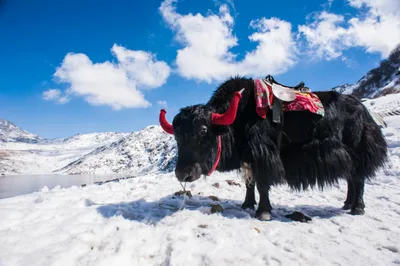 Gangtok, SikkimTsomgo (Changu) Lake Day Trip for Foreigners with GuideFull daypickup inclrefundable 24hfrom $68all-inSee the day →
What happens when snow closes the road?
Only heavy snow shuts it, operators say, and usually for a day or two: the government works to clear the road every day.
On heavy-snow days the authorities may stop issuing permits for Tsomgo Lake and Nathula. In December 2022, Sikkim Police paused them and cancelled permits already issued. Sometimes only the higher stretch shuts: on 19 February 2025, snow blocked the road beyond Tsomgo Lake to Baba Mandir and Nathula, while the road up to the lake stayed open.
If the day can’t run, you’re covered: Day Trio’s refund policy says that when a day can’t run because of “weather or snow, a road closure or landslide, a permit refused or suspended by the authorities”, you receive a full refund, including the service fee, and you’re welcome to book another date.
A day that has set off and is stopped partway is a different case. The same policy says that if a day has started and weather, snow or a road closure stops it partway, the day counts as run and isn’t refunded. An add-on that needs its own permit, like Nathula on the private day, is refunded if the authorities don’t issue that permit.
If only Nathula is shut, the Nathula days still go to Tsomgo Lake, and to Baba Mandir when the road beyond the lake is open. When the weather turns, drivers also start back down early, so the cars are off the high road before fresh snow settles.
A day you can book
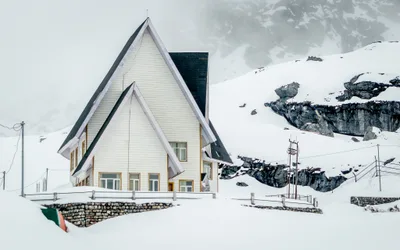 Gangtok, SikkimTsomgo Lake & Baba Mandir Day trip with Optional Nathula PassFull daypickup inclrefundable 24hfrom $41per vehicle, all-inSee the day →
What is Lachung like in the snow season?
Snowy: from about December to April there is snow in and around Lachung, and seeing it is why many guests go then.
Lachung is the base for two nights, and the sightseeing is at Yumthang and, for Indian nationals, Zero Point. If snow shuts the road to Yumthang or Zero Point on the day, operators say there is no other sightseeing up there to go to instead, so guests enjoy the snow in Lachung itself, where there is often snow then.
The shared homestay trip is for Indian nationals and includes two nights in a homestay, with their meals.
The private trip doesn’t include stays or meals. Foreign nationals can book it as a group of two or more; the registered guide they need is paid separately to the operator (see the permits guide).
If snow holds you in Lachung for an extra night or two, operators say you pay for that stay and its meals, on either trip.
On both Lachung trips, Zero Point is an extra, paid to the driver.
A day you can book
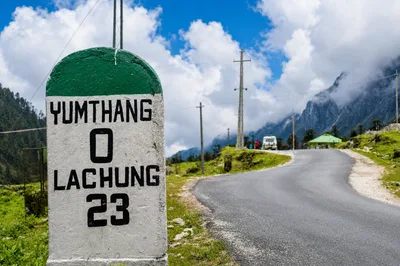 Gangtok, SikkimLachung & Yumthang 2N3D Shared Trip with Homestay & MealsMulti-daymeet in townrefundable 48hfrom $55per person, all-in3 sharingSee the day →
What should you take for the snow?
Warm layers, cash, and the ID you sent for the permit. On the road to Tsomgo Lake, snow boots, gloves and jackets can be hired, and in the snow season the cars carry snow chains.
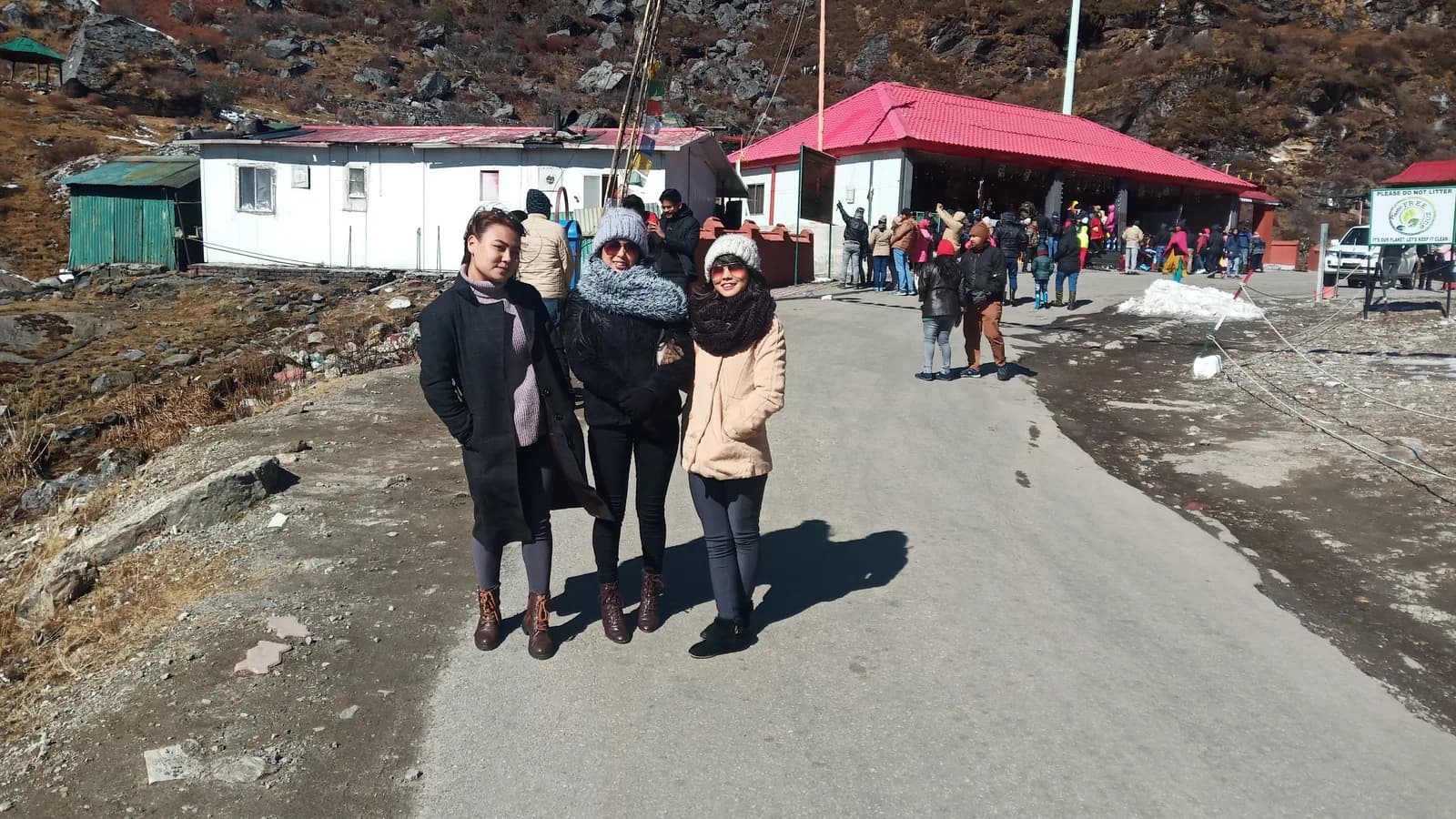
Hire shops at 17th Mile, on the Tsomgo Lake road, rent out snow boots, gloves and jackets, with tea stalls and small eateries alongside.
Snow boots, gloves or a jacket at 17th Mile: about ₹300–500 per item, depending on the shop, the material and the size (operators) · checked Oct 2026
In the snow season the cars carry snow chains, operators say. Sikkim’s Tourism Department asked in February 2026 that vehicles be properly equipped, snow chains included, whenever they travel in snowfall.
Operators also say even a small car, such as a Wagon-R, manages on these roads in snow.
Up high, the air is thinner. If you’d like one to hand, you can buy a portable oxygen can on the way up: shops on the road to Tsomgo Lake sell them, so you can pick one up before you climb rather than wait until you need it. If anyone feels unwell, tell the driver. If anyone in your group has a heart condition, high blood pressure or a breathing problem, read who should skip Nathula before you book a day up the Tsomgo Lake road.
Portable oxygen cans, at shops on the road to Tsomgo Lake: about ₹500 each (operators) · checked Oct 2026
Bring
- Warm layers, a hat and gloves
- Shoes with a good grip
- Sunglasses
- Cash for gear hire, tea and food on the way, and an oxygen can if you’d like one
- The same ID you sent for the permit
- Any medicines you take
Have ready
- A date from January to March, if snow matters most
- Your snow day early in your stay, with days to spare
- Every traveller’s details, added to your booking by the cut-off
- A spare day after a Lachung trip, in the snow months
- The day’s terms, read on its page before you book
Questions travellers ask
Is there snow in Gangtok in December?
Did it snow in Gangtok, or was it hail?
When is the best time to see snow near Gangtok?
Can foreign nationals see snow near Gangtok?
Do I get a refund if snow closes the road?
Do the cars carry snow chains?
Sources & checks
- Gangtok’s average temperatures, rainy days and hail days, 1981–2010, at the station’s 1,765 m — India Meteorological Department (climatological table, Gangtok) · checked Oct 2026
- Light snow at Tashi View Point, Ganesh Tok, Chandmari and nearby areas (article of 5 January 2020) — EastMojo · checked Oct 2026
- Tsomgo Lake and Nathula permits stopped, and permits already issued cancelled, in heavy snow (article of 30 December 2022) — EastMojo · checked Oct 2026
- Snow blocks the road from Tsomgo Lake to Nathula and Baba Mandir, while the road up to the lake stays open (19 February 2025) — All India Radio News · checked Oct 2026
- The Tourism Department’s advice that vehicles be properly equipped, snow chains included, in snowfall (article of 25 February 2026) — DTNext · checked Oct 2026
- Nathula: altitude 4,310 m — Incredible India, Ministry of Tourism, Government of India · checked Oct 2026
- A full refund, including the service fee, when a day can’t run because of weather or snow, a road closure or a permit refused or suspended — Day Trio, Refund & Cancellation Policy (updated 30 September 2026) · checked Oct 2026
- Who can book each day, Tsomgo Lake’s height, each day’s stops, what each trip includes, Zero Point as an extra, and each day’s weather terms — The days' own listings on Day Trio · checked Oct 2026
- Snow months at each place and the surest months; hail taken for snow; snow in town only in an extreme winter; roads shut only in heavy snow and cleared daily; on the shared Nathula day, refunds when the permits are or aren’t issued, and the Nathula add-on on the private day; Lachung when Yumthang or Zero Point is shut, and extra nights; snow chains and small cars; every day runs all year; gear hire at 17th Mile; oxygen cans on the Tsomgo Lake road; drivers starting back down early — First-hand: the author and the operators who run these days · checked Oct 2026