Sikkimese Food: Famous Traditional Dishes and Where to Eat
Momos are only the start. The famous and traditional food of Sikkim, community by community, from gundruk and kinema to khuri and wachipa, and where to taste it in Gangtok.
The short answer
Sikkimese food is home cooking from the Lepcha, Bhutia and Nepali communities: rice with dal, greens and pickle, noodle soups and momos, and fermented foods that keep for months.
- Famous dishes to try: momos, thukpa, gundruk, kinema, chhurpi, sel roti and khapse.
- Each community keeps its own: khuri from the Lepcha, phing and butter tea from the Bhutia, wachipa from the Rai, kinema and tongba from the Limbu.
- In Gangtok, momos and thukpa are on almost every menu. The home dishes are easiest to taste at a family table.
Trips you can book for this
Most dishes are mild: the heat is in the pickle and the chilli on the side.
Quick facts
Checked Nov 2026
- Every day
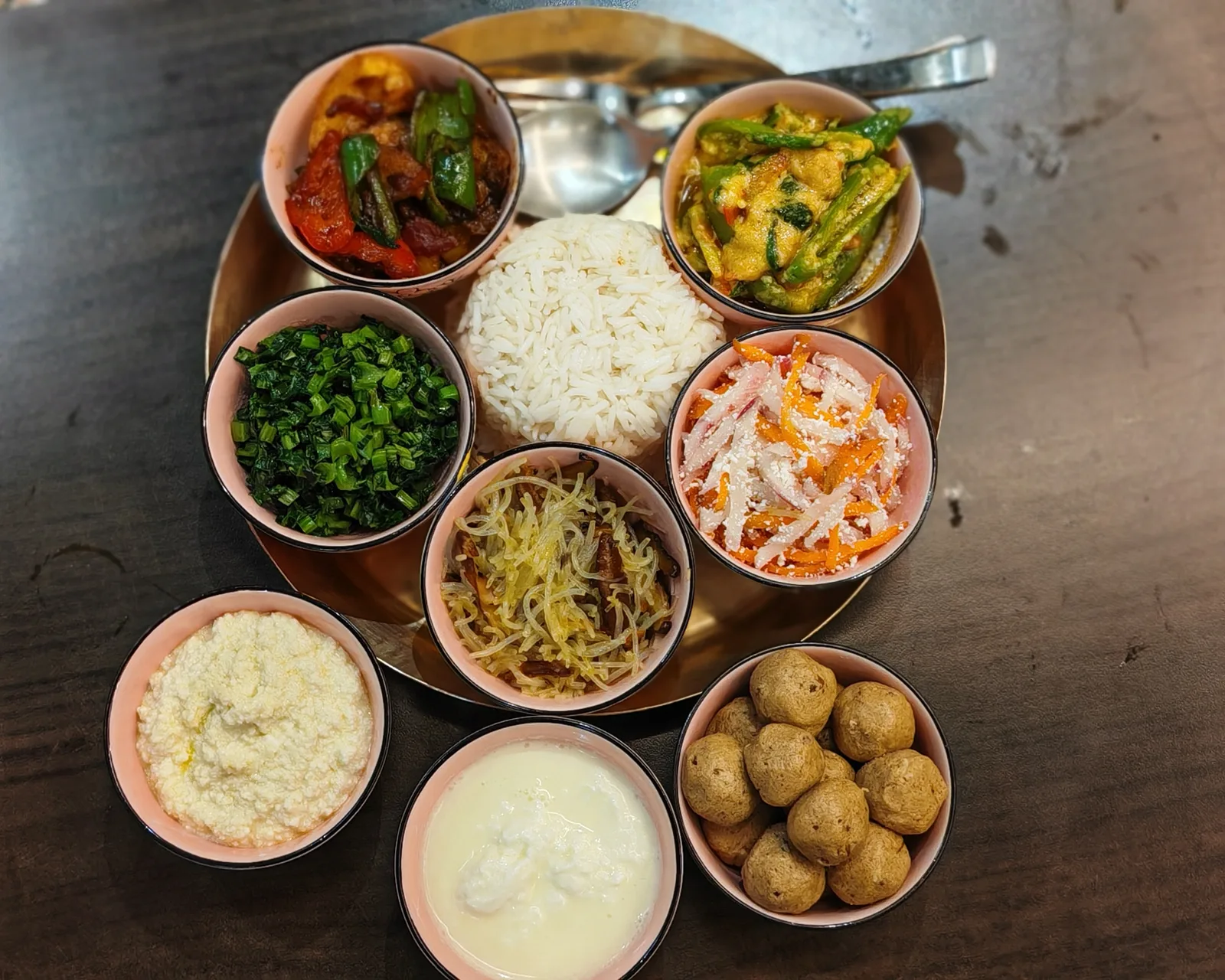
- Rice, dal, a vegetable curry, curd and pickle
- Fermented food
- About 13 percent of what Sikkim eats each day
- The chilli
- Dalle khursani, small, round and very hot
- Vegetarians
- About 1 in 9 people in Sikkim
- Drinks
- Tea, butter tea, and warm millet beer
- Home dinner in Gangtok from
- from ₹1,499 per person
from the listing, always current
What is the famous food of Sikkim?
Momos and thukpa are the dishes everyone knows. Sikkim’s own famous foods are the ones made at home: gundruk and sinki, kinema, chhurpi, sel roti, and rice with greens and pickle.
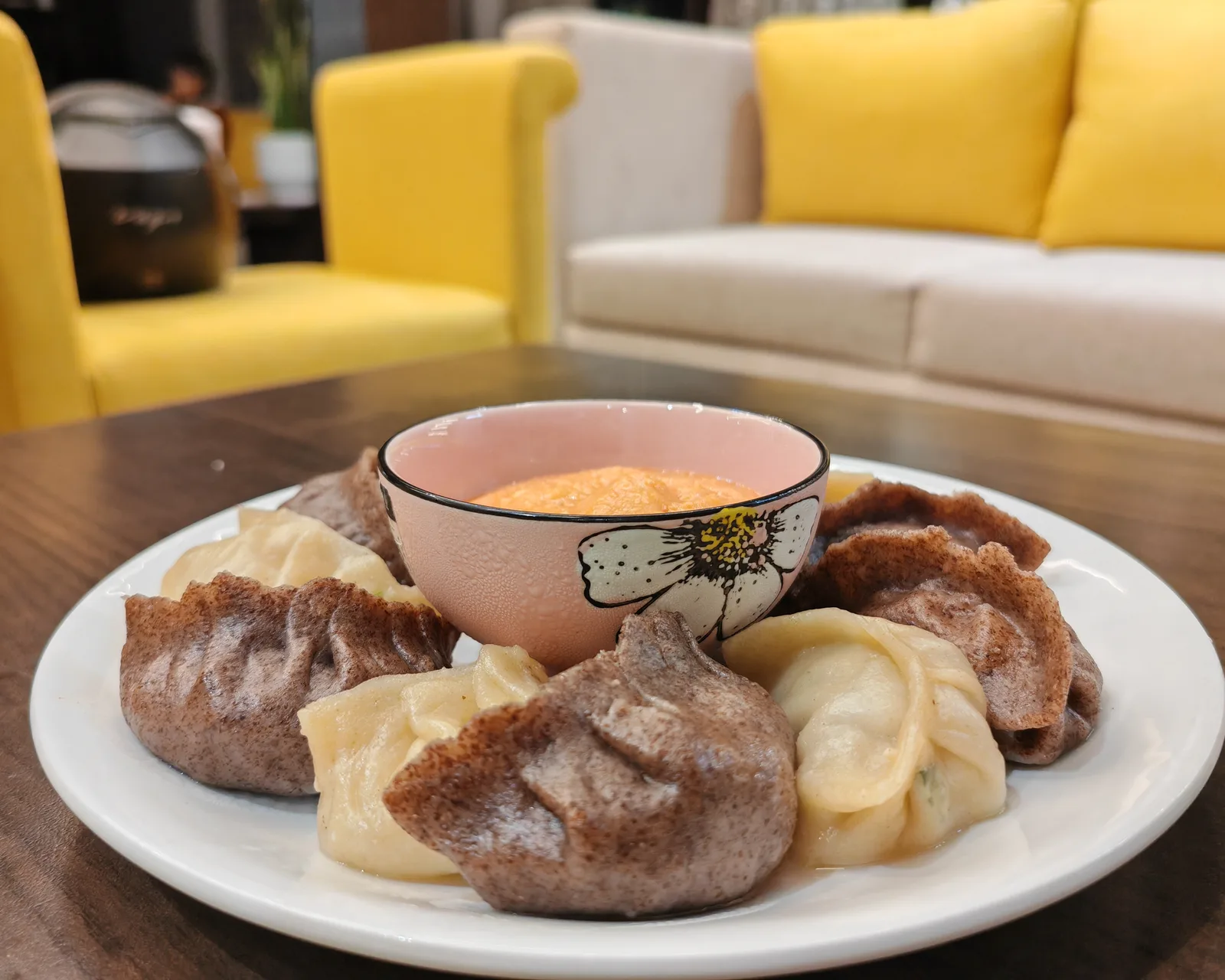
- Momo: steamed dumplings filled with vegetables or meat, eaten with a soup and a tomato pickle. Some homes now make them with millet flour.
- Thukpa and gyathuk: noodle soup with vegetables or meat, on almost every menu. Thenthuk has hand-pulled noodles.
- Phing: glass noodles cooked with mushroom or meat, a Bhutia home dish.
- Shaphaley: bread dough folded around a filling and fried.
- Gundruk: mustard, radish or cauliflower leaves, fermented and sun-dried, cooked as a sour soup or a pickle.
- Sinki: radish root fermented and dried the same way, and cooked the same way.
- Kinema: fermented soybeans, sticky and strong-smelling, cooked as a curry.
- Chhurpi: cheese made from buttermilk. Soft chhurpi goes into curries and pickles; hard chhurpi is chewed slowly, for a long time.
- Ningro with chhurpi: young fiddlehead fern cooked with soft cheese.
- Sisnu: a thick soup of young stinging-nettle leaves, cooked with a little rice.
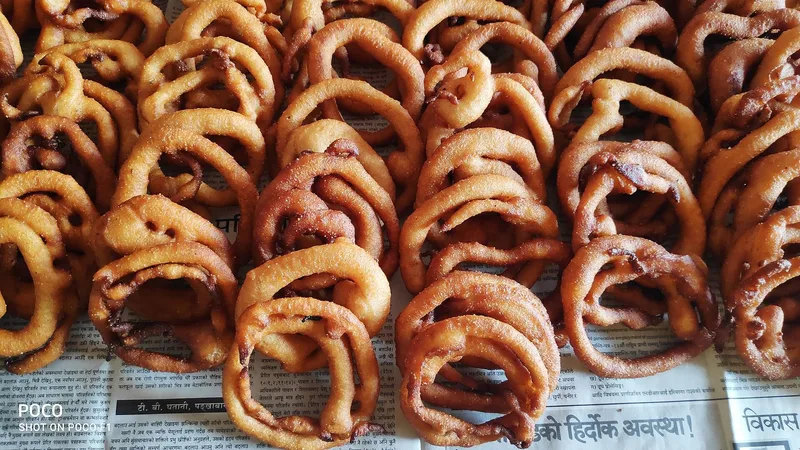
- Sel roti: a sweet, ring-shaped rice bread, deep-fried, made for festivals.
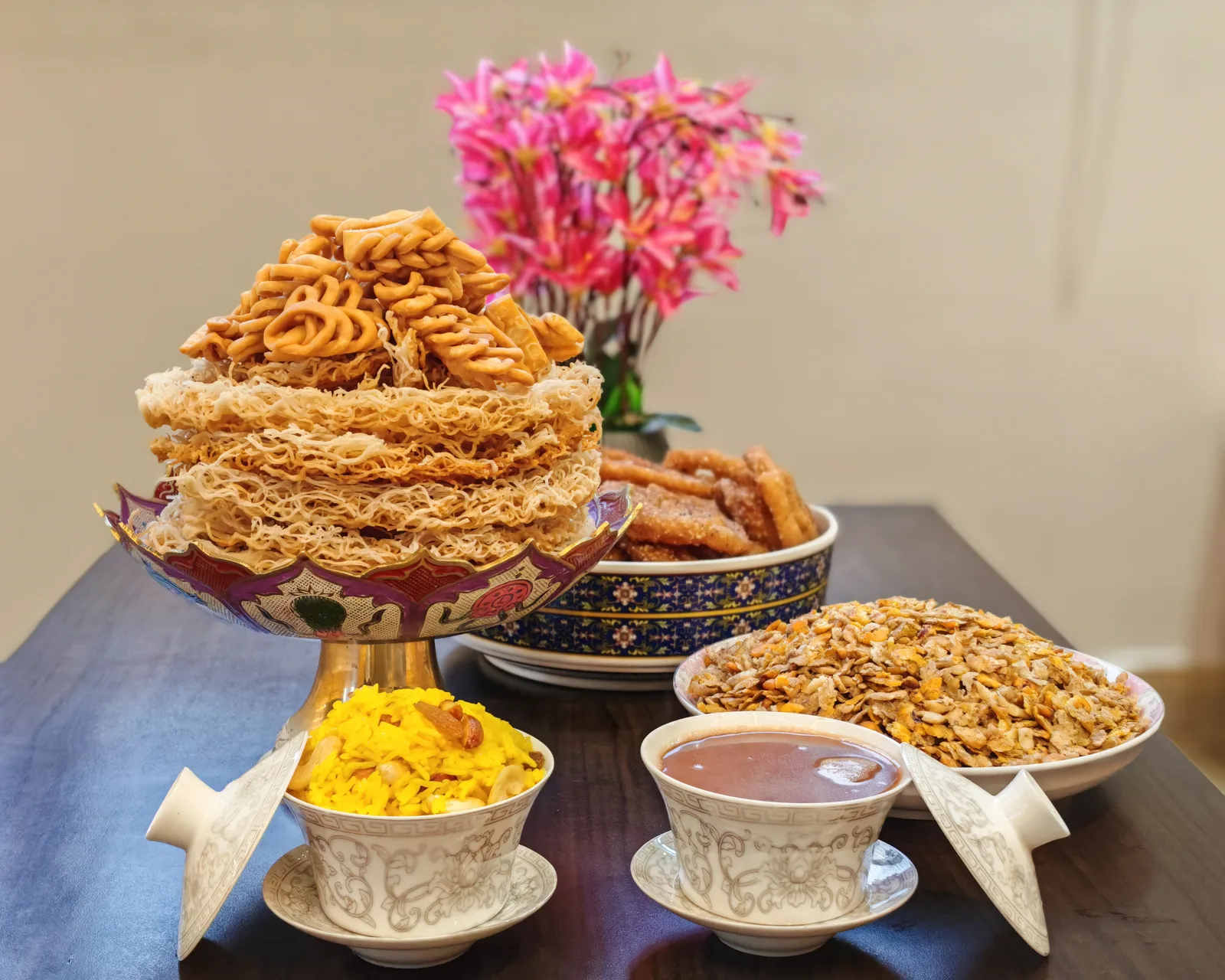
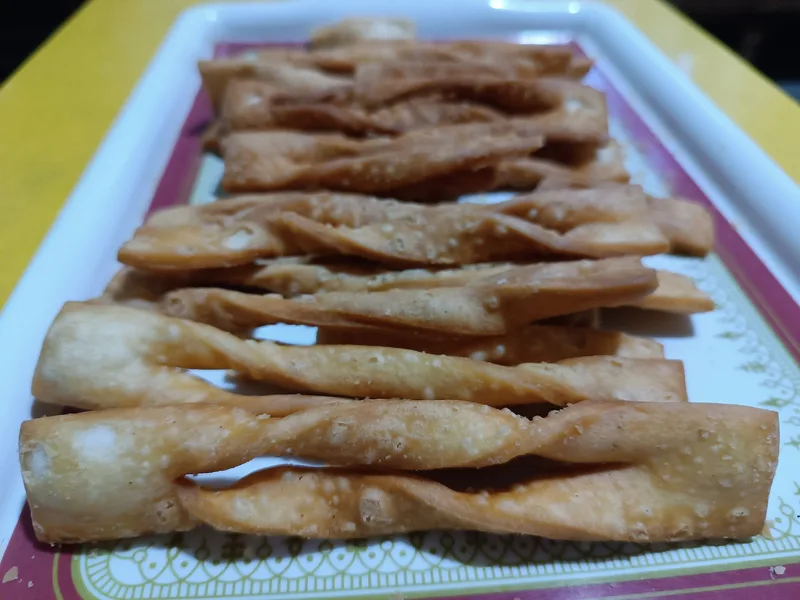
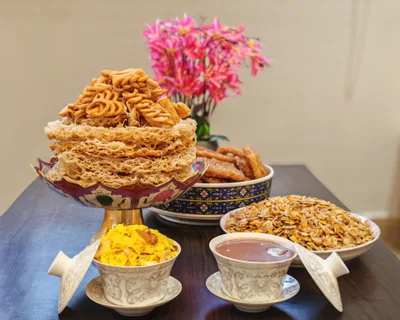
- Khapse: folded, deep-fried pastries made for Losar and Losoong.
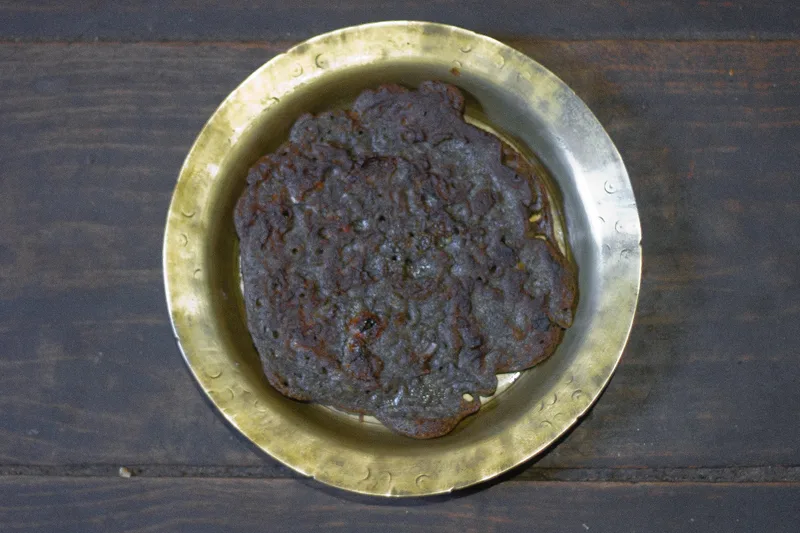
- Kodo ko roti and phapar ko roti: flatbreads of finger millet and of buckwheat, eaten with pickle.
- Dalle khursani: Sikkim’s small round chilli, in pickles and beside most meals.
- Suja: butter tea, made with butter and salt.
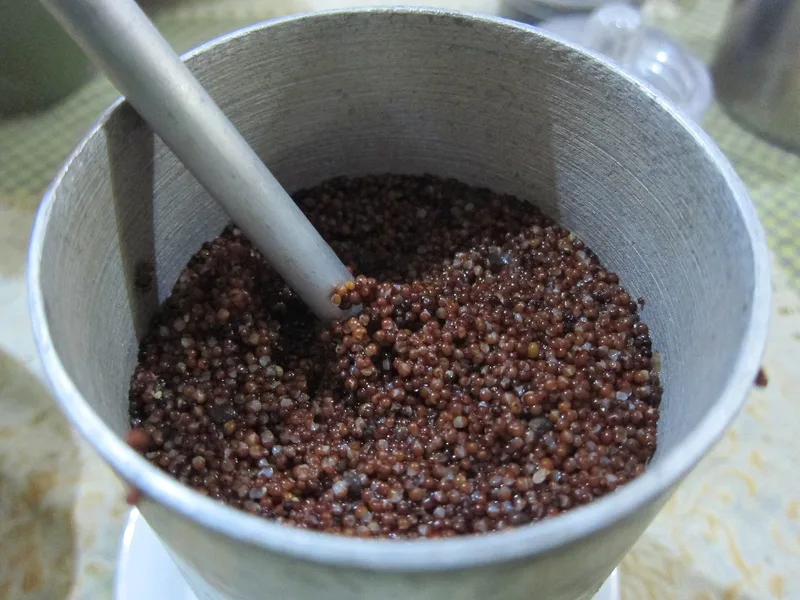
- Tongba: warm millet beer, sipped through a bamboo straw.
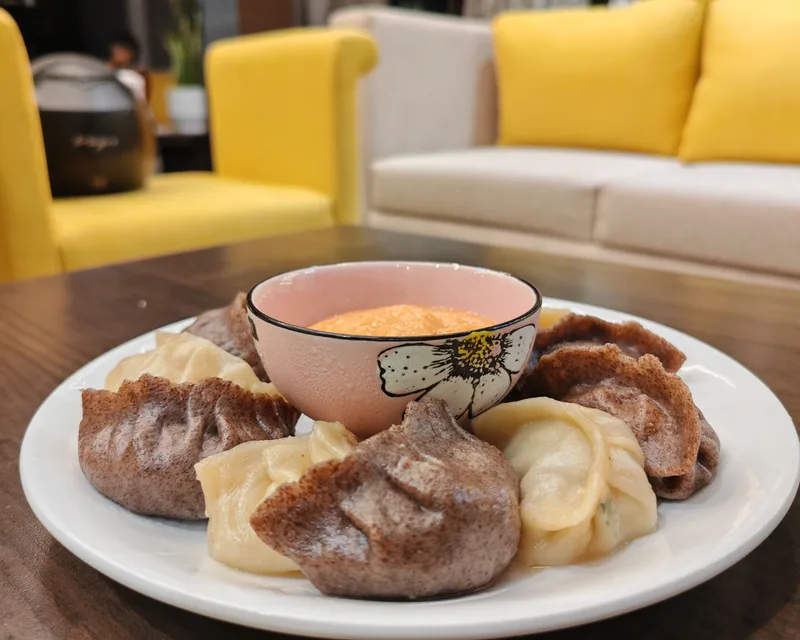
Is it spicy? Mostly not. Food in the Sikkim hills is traditionally cooked in butter with few spices; the heat comes from the pickle and the dalle chilli served on the side, so you take as much as you like.
What is the traditional food of Sikkim?
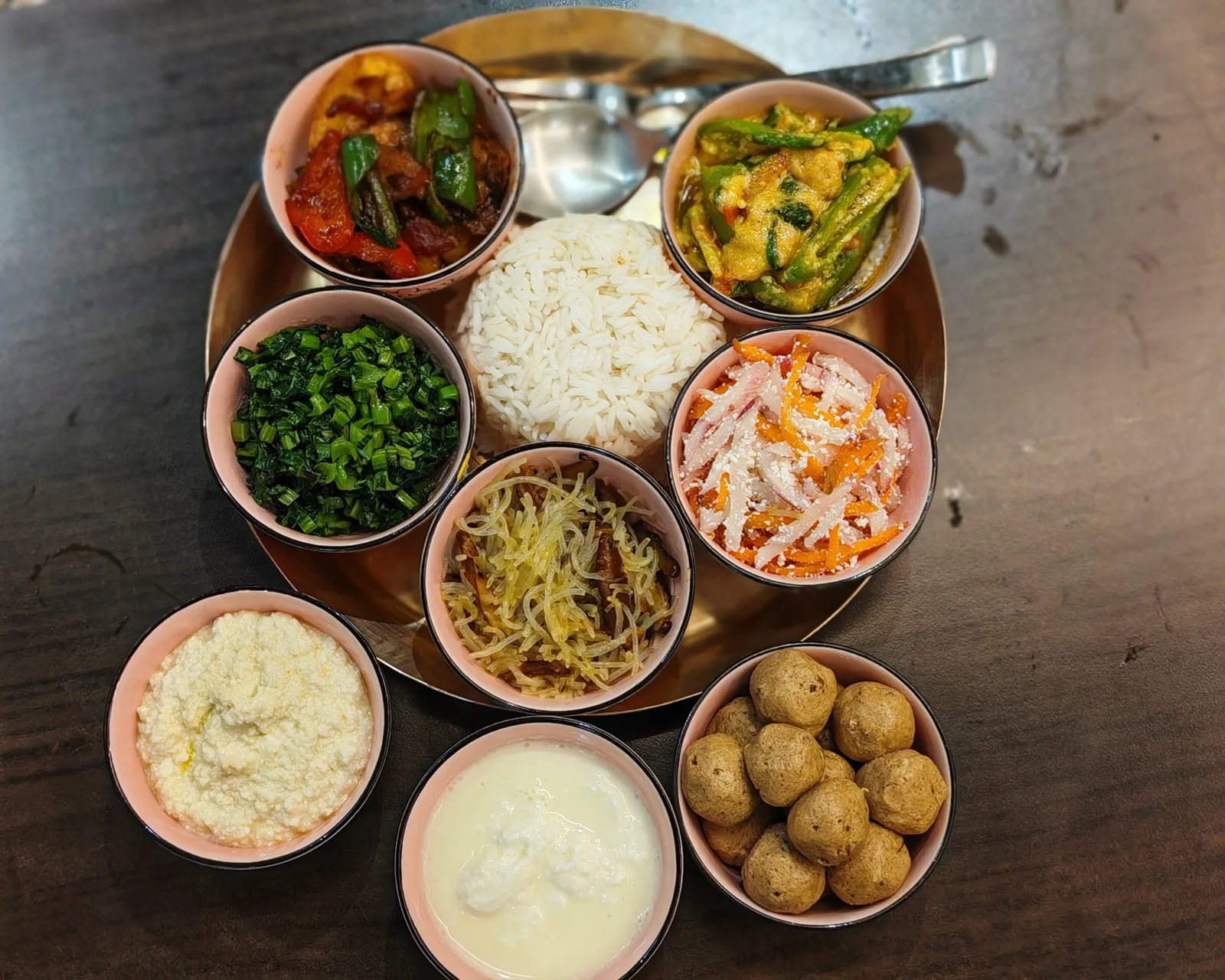
The traditional meal is bhat, dal, tarkari, dahi and achar: rice, a lentil soup, a vegetable curry, curd or buttermilk, and a pickle. It is eaten twice a day, in the morning and early in the evening.
The day begins with a mug of tea, with sugar or with salt, with or without milk. Afternoons are tea and a snack. Where rice did not grow, families ate maize and millet instead: dheroh, a thick porridge of corn or millet flour, eaten with gundruk, is still the typical farmer’s meal.
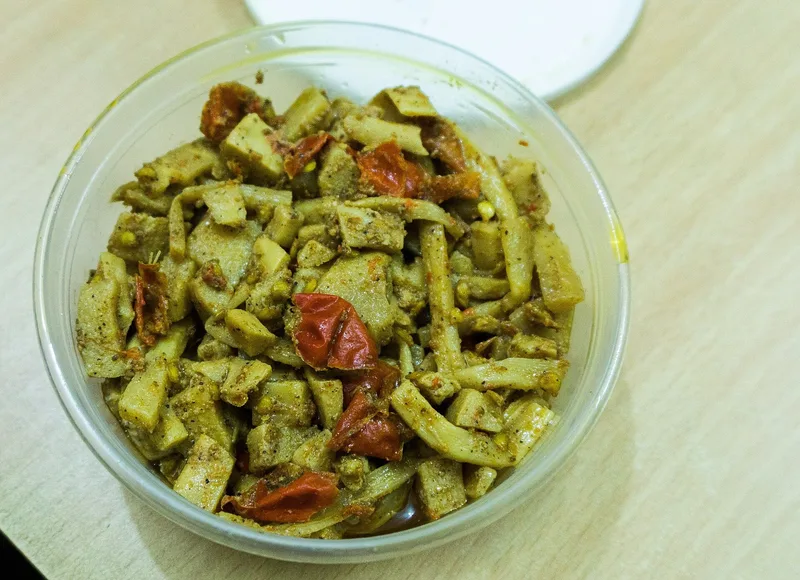
Much of the plate is greens from the fields and the forest: stinging nettle, fiddlehead fern, young bamboo shoot, chayote (iskus), mustard greens and watercress. Breads are made from buckwheat and finger millet, and the pickles are many: timbur (Sichuan pepper), silam (perilla seed), soybean, bamboo shoot, tomato and dalle chilli.
Since 2016 Sikkim has farmed only organically, the first Indian state to do so. Its Gangtok district names its own famous recipes: momo, thukpa, kinema curry, gundruk and sinki soup, chhurpi soup and pickle, ningro with chhurpi, sel roti and bamboo-shoot pickle. More things to do in the capital are on the Gangtok page.
Which fermented foods is Sikkim known for?
Sikkim ferments vegetables, soybeans, milk and grain so they keep when fresh food is out of season. Fermented foods are about 13 percent of what people in Sikkim eat each day.
- Gundruk: leafy greens fermented for about a month, then dried in the sun. Sour; cooked as soup or pickle.
- Sinki: radish root fermented and dried the same way.
- Kinema: boiled soybeans left to ferment for two or three days. The name comes from the Limbu word kinambaa: ki for fermentation, nambaa for flavour.
- Mesu: fermented young bamboo shoot (its Limbu name; tama in Nepali), made into a sour pickle.
- Khalpi: a large ripe cucumber pickled hot and sour, made a few days before a festival.
- Maseura: black gram paste dried into small balls, added to curries.
- Chhurpi: soft cheese from cow’s milk for curries and pickles, and hard cheese from yak’s milk that is chewed.
- Dahi, mohi and gheu: curd, buttermilk and butter, on most tables.
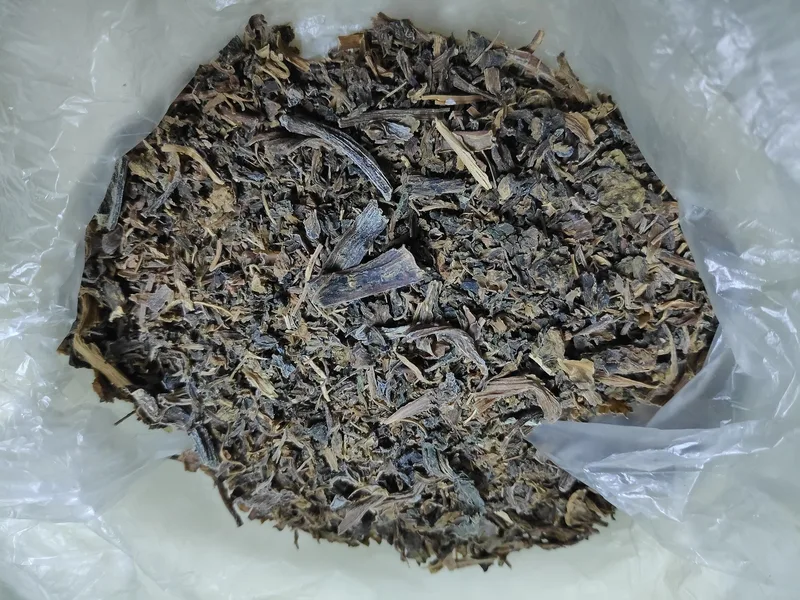
Dried gundruk and sinki keep for months without a fridge and weigh far less than the fresh vegetables, which is why they were made for the long monsoon, when fresh vegetables are scarce, and carried on long walks between villages.
What does each community in Sikkim cook?
Sikkim’s people are the Lepcha, the Bhutia, the Sherpa and many Nepali communities, among them the Rai, Limbu, Tamang, Gurung, Magar and Newar. A survey of 370 Sikkim homes listed more than 80 dishes, many of them cooked by one community only.
Lepcha
The Lepcha are said to be Sikkim’s first people, and Dzongu in North Sikkim was declared a Lepcha reserve to protect them. Millet runs through their food and their rites, from khuri to chi.
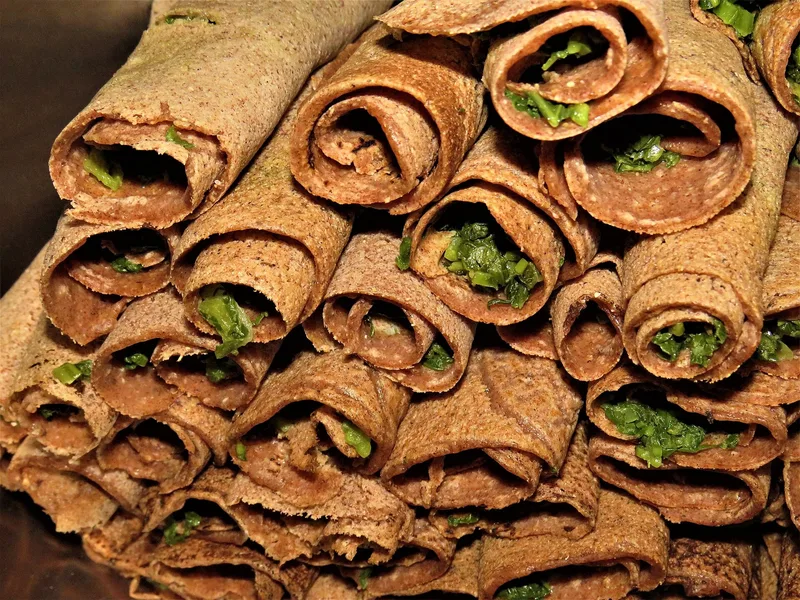
- Khuri: a buckwheat or millet crepe rolled around wild greens and herbs with chhurpi, a Lepcha dish also made in Bhutia homes, sometimes with meat.
- Tuk-tok: rice porridge made for Namsoong, the Lepcha new year in December and January, plain with curd and ghee or cooked with meat.
- Ponguzom: rice, fish and vegetables packed into a green bamboo and cooked over the fire.
- Sorongbeetuluk: a porridge of rice and nettle.
- Khuzom: bread baked on a flat stone taken from the river.
- Chi: the Lepcha millet drink, poured at ancestral rites, weddings and births.
A night in Dzongu
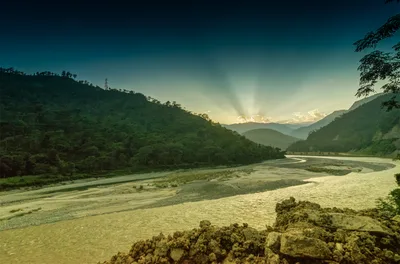 Gangtok, Sikkim1N/2D Dzongu from GangtokMulti-dayHotel pickupFull refund up to 24 hours beforefrom ₹13,000per vehicleSee the trip →
Bhutia
The Bhutia came from the Kham region of Tibet, and their kitchen shows it: noodles, barley, butter and tea. Losoong, the Sikkimese harvest festival, and Losar, the Tibetan new year, are when the festive dishes come out.
- Phing: glass noodles with mushroom or meat.
- Gyathuk or thukpa: noodle soup, eaten in Bhutia and Lepcha homes.
- Shaphaley: fried bread with a filling.
- Tsampa: roasted barley flour, eaten as a snack.
- Suja: tea boiled with salt and butter.
- Khapse and zhero: deep-fried festival snacks, also made by the Tamang.
- Nya phachung: fish grilled in bamboo, a Bhutia and Lepcha dish.
- Ken-tsong: roasted maize flakes.
Rai
The Rai dish people ask about is wachipa: rice cooked with minced chicken and a fine black powder made by burning the bird’s small, soft feathers. The powder makes it bitter, with a roasted smell. It is made for festivals and rituals and at the rice harvest, and Rai families believe it eases body aches. Bumchimpa, a newer vegetarian version, uses the dried flowers of the damlapa plant instead.
- Bauwa: rice flour boiled in plenty of water into a stew.
- Chakho: rice and millet cooked together.
- Lauwa: rice cooked with vegetables.
- Sishnu ko jhol: nettle soup, made by the Rai and many others.
Limbu
Kinema is thought to have begun in Limbu kitchens, and tongba is the Limbu drink: offering it to a guest is a sign of respect, and it is shared at weddings and festivals.
- Khoreng: a baked bread of wheat, millet, buckwheat, maize or rice flour.
- Phando: soybeans fried, ground and cooked as a dal.
- Nambongmuchi: perilla seeds fried, ground and mixed with chilli, a dry pickle.
Tamang
- Alum: a paste of finger millet or buckwheat rolled and boiled, eaten at Sonam Losar, the Tamang new year.
- Foldong: a flat rice cake with cardamom, cloves, dried fruit and butter, taken to the bride’s parents to seal a marriage.
Newar
- Kwati: a thick soup of nine kinds of sprouted beans, eaten at Kwati Purnima in August.
- Chatamari: a rice-flour pancake, plain or topped with minced meat.
- Yomari: a steamed rice-flour dumpling.
- Lakhamari: deep-fried sweet cookies.
Gurung, Sherpa and others
- Falki: a Gurung mutton curry cooked with dried green maize.
- Rigichoboo and aree: Sherpa potato dishes, the second with wheat and meat.
- Chambray: a Nepali rice pulao with bay leaf and cinnamon, eaten with potatoes.
- Phulaurah: black gram fritters, eaten hot with perilla-seed pickle.
Festival food, and when to taste it
Festival dishes are made at home, so you taste them if you are in Sikkim at the right time, often from a family or a homestay.
- Sel roti: at Dashain (Dussehra) and Tihar (Diwali), and at weddings.
- Khapse: at Losoong, the Sikkimese harvest festival, and Losar, the Tibetan new year.
- Tuk-tok: at Namsoong, the Lepcha new year, in December and January.
- Alum: at Sonam Losar, the Tamang new year.
- Kwati: at Kwati Purnima in August.
- Wachipa: at the rice harvest, from October to December.
- Khalpi: pickled a few days before a festival.
What can vegetarians eat in Sikkim?
Plenty. About one person in nine in Sikkim is vegetarian, and much of the home table is greens, cheese, beans and fermented vegetables.
- Gundruk or sinki soup, and kinema curry
- Sisnu (nettle) soup, and ningro with chhurpi
- Vegetable momos, sometimes filled with chayote (iskus)
- Phing cooked with mushroom
- Khuri made with greens and chhurpi, and millet or buckwheat breads with pickle
- Tuk-tok made the plain way, with curd and ghee
- Kwati, chatamari plain, sel roti and khapse
What do people drink in Sikkim?
Tea first. Sikkim grows its own at Temi, and Bhutia homes make suja, butter tea with salt. In the evenings, many communities drink beer made from fermented millet.
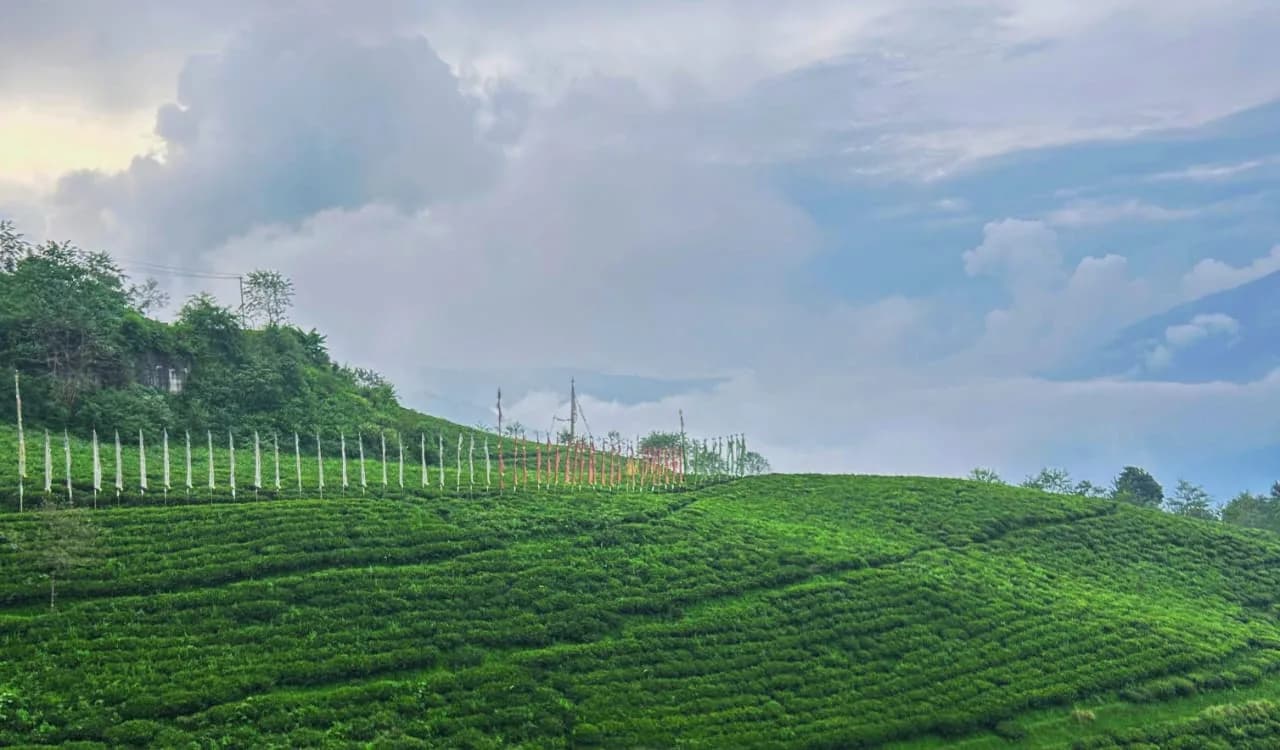
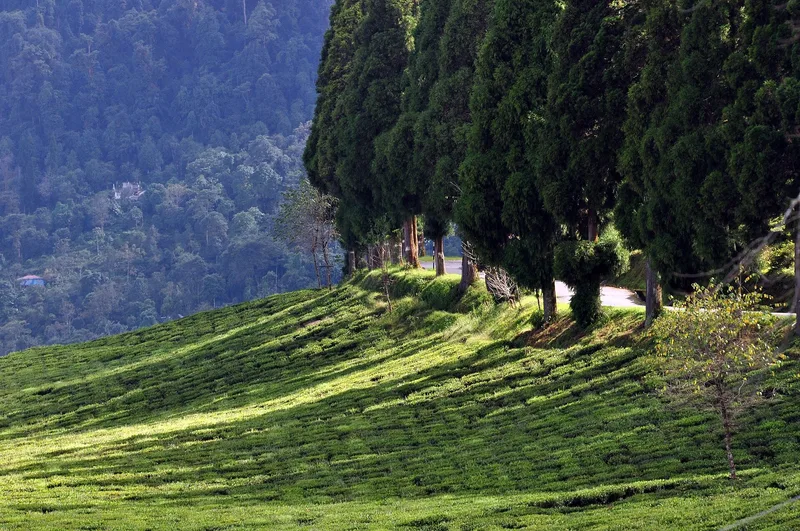
Temi Tea Garden, set up in 1969 on the slopes of the Tendong hills in South Sikkim, is the only tea garden in the state, and its tea is grown organically.
- Tongba: fermented finger millet in a tall vessel. Warm water is poured over it, left a few minutes, and sipped through a bamboo straw that keeps the grains back. Mildly alcoholic.
- Kodo ko jaanr and chhang: the Nepali and Bhutia names for millet beer. Bhutia homes serve chhang in bamboo containers.
- Chi: the Lepcha millet drink.
- Raksi: a clear spirit distilled from grain.
- Mohi: buttermilk, drunk as a refreshing drink.
The millet drinks are fermented with marcha, a starter made from rice, wild herbs and spices, and they are offered at monasteries and family rites as well as drunk.
A day from Gangtok that starts at Temi
 Gangtok, SikkimTemi Tea Garden, Char Dham & Buddha Park Day from GangtokFull dayHotel pickupFull refund up to 24 hours beforefrom ₹4,000per vehicleSee the trip →
What is Gangtok famous for in food, and where can you eat it?
In Gangtok, momos and thukpa are on almost every menu. Lal Bazaar sells the local greens, cheeses and festival snacks. The home dishes are the hardest to find.
Lal Bazaar was first built in 1956, just below MG Marg, and named after John S. Lall, the first dewan (minister) to the Chogyal: the name has nothing to do with the colour red. It is now the Kanchendzonga Shopping Complex, joined to MG Marg by a stairway called Thado Line, with the vegetable market on the first floor.
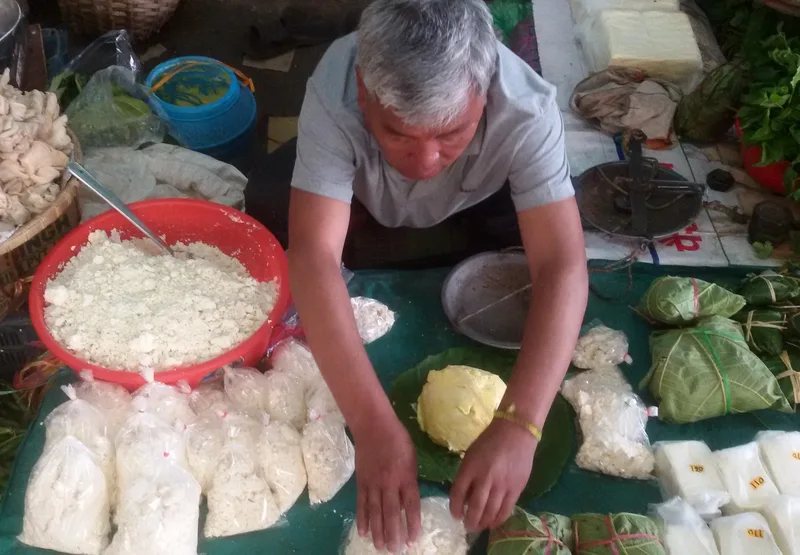
The vegetable stalls, most of them run by local women’s self-help groups, sell mustard greens, watercress, chayote, chhurpi, dried fish, and festival snacks like khapse and sel roti.
Dishes like nettle soup, gundruk, millet momos or butter tea with khapse are mostly cooked at home, and are much harder to find on a menu than momos. The easiest way to taste them is at a family table.
A Sikkimese family in Tadong, about 5 km below MG Marg, seats six guests at one table for a home dinner: butter tea and khapse to begin, millet momos you fold yourself, then rice, dal, gundruk, sisnu, ghee chhurpi and bamboo-shoot pickle, with tsog torma to finish. Chicken is the only meat; vegetarians get the same plate without it.
Each dish is brought out on its own and explained before you eat it, and the kitchen stays open if you want to watch something being made.
Dinner at a family table
 Gangtok, SikkimTaste of Sikkim You Won't Find in Restaurants, GangtokA few hoursPickup point: Daragoun, TadongFull refund up to 48 hours beforefrom ₹1,499per personSee the trip →
What food can you take home from Sikkim?
Take home what keeps: dalle chillies and their pickles, large cardamom, Temi tea, hard chhurpi, and dried gundruk or sinki.
Dalle khursani and Sikkim large cardamom are both registered geographical indications (GI) of Sikkim and West Bengal: foods tied by law to the place they are grown.
Packs well
- Dalle khursani, dried or as pickle
- Sikkim large cardamom
- Temi tea
- Hard chhurpi
- Dried gundruk and sinki
Eat it there
- Kinema: keeps two or three days in summer
- Soft chhurpi
- Sel roti, best the day it is fried
- Tongba and chhang, made fresh
Questions travellers ask
What is the most famous food of Sikkim?
What do people in Sikkim eat every day?
Is Sikkimese food spicy?
Are momos from Sikkim?
What is chhurpi?
Is tongba alcoholic?
What is wachipa?
Where can I eat traditional Sikkimese food in Gangtok?
Sources & checks
- More than 80 dishes of Sikkim and which community cooks each, from a survey of 370 homes; the everyday meal; vegetarians in Sikkim; alum, foldong, chatamari, kwati, ponguzom, khuzom, falki and wachipa — Tamang and Thapa, “Some nonfermented ethnic foods of Sikkim in India”, Journal of Ethnic Foods (Sikkim University) · checked Nov 2026
- Sikkim’s fermented foods and drinks; how much of the day’s food is fermented; why gundruk and sinki are dried — Tamang, Okumiya and Kosaka, “Cultural Adaptation of the Himalayan Ethnic Foods”, Himalayan Study Monographs (Kyoto University) · checked Nov 2026
- Tuk-tok at Namsoong; where the word kinema comes from and how long it keeps; khalpi; wachipa; nettle soup — ICIMOD, Ethnic cuisines from the eastern Himalaya · checked Nov 2026
- Khuri, the millet drinks and marcha, sisnu, ningro, gundruk, kinema, chhurpi, the noodle soups, khapse and sel roti — Sahapedia, “Sikkim’s Flavourful Kitchen: Grains on the Plate” · checked Nov 2026
- Lal Bazaar’s history and name, the stairway and the vegetable market, and what its stalls sell — Sahapedia, “Lall Bazaar: A Living Archive” · checked Nov 2026
- The district’s famous recipes; the Lepcha, Bhutia and Nepali communities; Dzongu set aside for the Lepcha — Gangtok district, Government of Sikkim, “People and recipes” · checked Nov 2026
- Wachipa, its vegetarian version bumchimpa, and when it is made — GOYA, “Wachipa: a rice dish made with burnt chicken feathers” · checked Nov 2026
- Dalle Khursani and Sikkim Large Cardamom registered as geographical indications — APEDA, GI products of Sikkim · checked Nov 2026
- Temi Tea Garden: set up in 1969, the only tea garden in Sikkim, organic — Wikipedia, Temi Tea Garden · checked Nov 2026
- Tongba, the Limbu drink, and how it is drunk — Wikipedia, Tongba · checked Nov 2026
- Sikkim the first fully organic state, in 2016 — Wikipedia, Sikkimese cuisine · checked Nov 2026
- What the Tadong home dinner serves, where it is, and how many sit at the table — The dinner’s own listing on Day Trio · checked Nov 2026