Pashupatinath: Aarti Time, Dress Code, Who Can Enter
When Pashupatinath’s evening aarti takes place and where to watch it, who may enter the main temple, what to wear, how to behave at the ghats, and what Indians pay to go in.
The short answer
The evening aarti is held daily, at about 5:30 pm in winter and 6:30 pm in summer. Only Hindus may enter the main temple, and Indians enter free.
- Watch the aarti from the eastern bank of the Bagmati: the temple trust says visitors of every background may watch from there.
- The main temple is for Hindus only. Everyone is welcome in the wider complex: the ghats, the gardens and the smaller shrines.
- Dress modestly, with no shorts or sleeveless tops. Leave leather outside, and take your shoes off before any shrine.
- The sacred heritage day visits Pashupatinath by day, as its first stop. The evening aarti is not part of it.
Trips you can book for this
Times are from the Pashupati Area Development Trust’s own site, read on 27 October 2026. Check them again close to your visit.
Quick facts
Checked Oct 2026
- Temple hours
- Open daily, 4 am to 9 pm
- Evening aarti
- Daily; about 5:30 pm in winter, 6:30 pm in summer
- Main temple
- Hindus only; everyone may visit the complex and ghats
- Entry for Indians
- Free for Indian nationals
- Dress
- Modest and traditional; no shorts or sleeveless tops
- Photos
- Not inside the main temple or during ceremonies
What time is the Pashupatinath evening aarti?
Every evening: at about 5:30 pm in winter and 6:30 pm in summer, operators say. The temple trust lists it between 5 and 7:30 pm.
On 27 October 2026, the Pashupati Area Development Trust’s site gave two times on one page. Its darshan schedule said 5 to 7 pm; its day schedule said 6:30 to 7:30 pm. A night aarti follows, listed from 7 to 8 pm. In practice the evening aarti starts earlier in winter and later in summer, operators say, so check the time on the day.
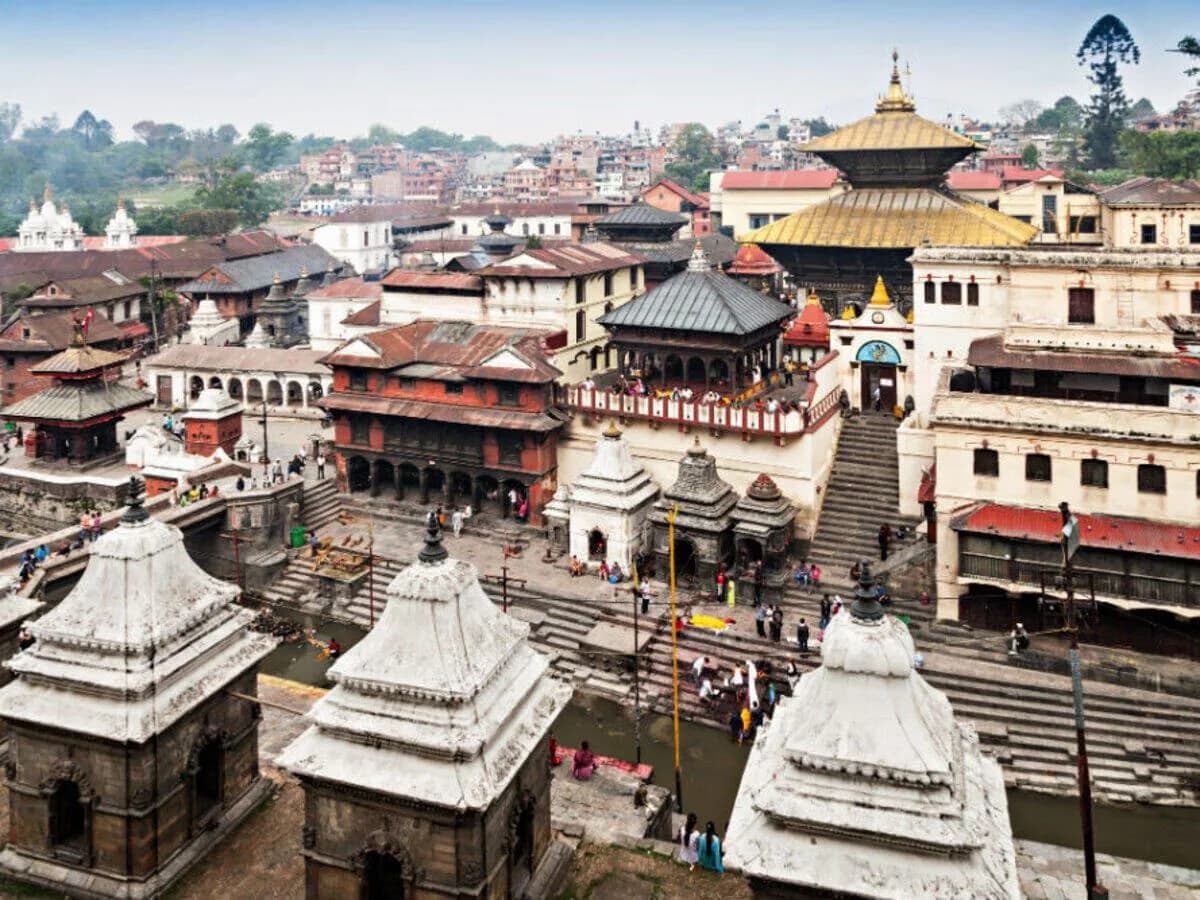
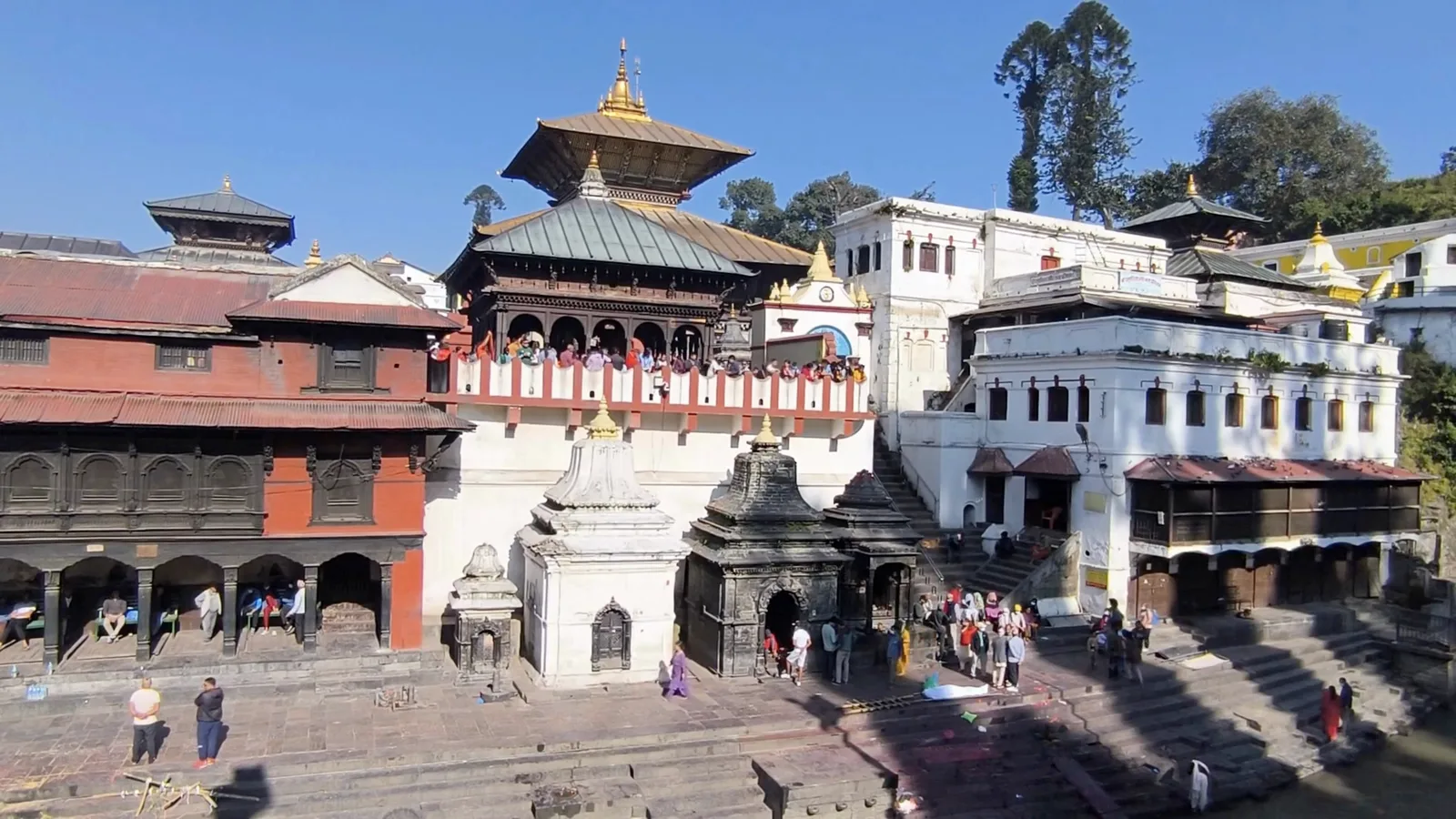
The trust says visitors of every background may watch the evening aarti from the eastern bank of the Bagmati. That is the side across the river from the main temple, where the terraces look over the water.
The temple itself is open daily from 4 am to 9 pm. The morning puja begins at 4 am, and the evening Shayan puja at 7:30 pm.
Who can enter Pashupatinath Temple?
Only Hindus may enter the main temple. Visitors of other faiths are welcome in the rest of the complex: the ghats, the gardens and the smaller shrines around it.
The temple trust and the Nepal Tourism Board both say so. From the terraces across the Bagmati to the east, visitors who are not Hindu can look across to the temple and the ghats.
The rule is about faith, not passport. An Indian Hindu may go in; a traveller of another faith, from India or anywhere else, watches from outside.
The same holds at Guhyeshwari, the goddess temple close by on the Bagmati. The Tourism Board says it is also closed to non-Hindus.
What is the dress code at Pashupatinath?
Modest, traditional clothes. The temple trust says shorts, sleeveless tops and western casual wear are not allowed on the temple grounds.
The sacred heritage day’s listing also asks for shoulders and knees to be covered at every religious site. Long, loose clothes see you through the whole day.
Leather stays outside. The Nepal Tourism Board names shoes, belts and camera cases among the leather items not allowed in the complex. The trust also asks you to take your shoes off before entering any shrine.
Wear and bring
- Clothes that cover shoulders and knees
- Long, loose trousers, a long skirt or traditional dress
- Shoes that slip off easily
- A passport or Voter ID, for free entry as an Indian national
- Some cash or a UPI app, for offerings
Leave behind
- Shorts and sleeveless tops
- Leather belts, bags and camera cases
- A drone, unless the trust has given written permission
- Your shoes, outside any shrine you enter
Is there an entry fee at Pashupatinath for Indians?
No. The Nepal Tourism Board lists entry as free for Indian nationals and for Nepalis.
Pashupatinath Temple: free for Indian nationals and Nepalis; other SAARC nationals NPR 1,000; other foreign nationals NPR 1,000 per day per entry (Nepal Tourism Board) · checked Oct 2026
Visitors from other countries pay per day and per entry. If you are Indian, keep your passport or Voter ID with you in case you are asked to show it.
Pujas are separate from entry. The trust publishes its own list of puja rates on its website.
Tickets are not part of the sacred heritage day’s price: its listing leaves monument tickets for you to pay. What the day’s other sites charge is in Kathmandu for Indian travellers.
How should you behave at the cremation ghats?
Quietly, and at a respectful distance. The ghats are open to everyone, and the families there are holding a funeral.
Cremations take place on the ghats along the river. The temple trust lists Arya Ghat, Bhasmeswor Ghat and an electric crematorium among its services, and its last-rites service at Arya Ghat runs round the clock.
The trust allows respectful photos of the ghats and other outdoor areas, but none inside the main temple or during religious ceremonies. A cremation is a religious rite, so keep your camera down while one is under way.
Give way to anyone carrying a body to the river, keep your voice low, and never photograph mourners close up. Watching from the eastern terraces keeps you out of the families’ way.
How does the sacred heritage day include Pashupatinath?
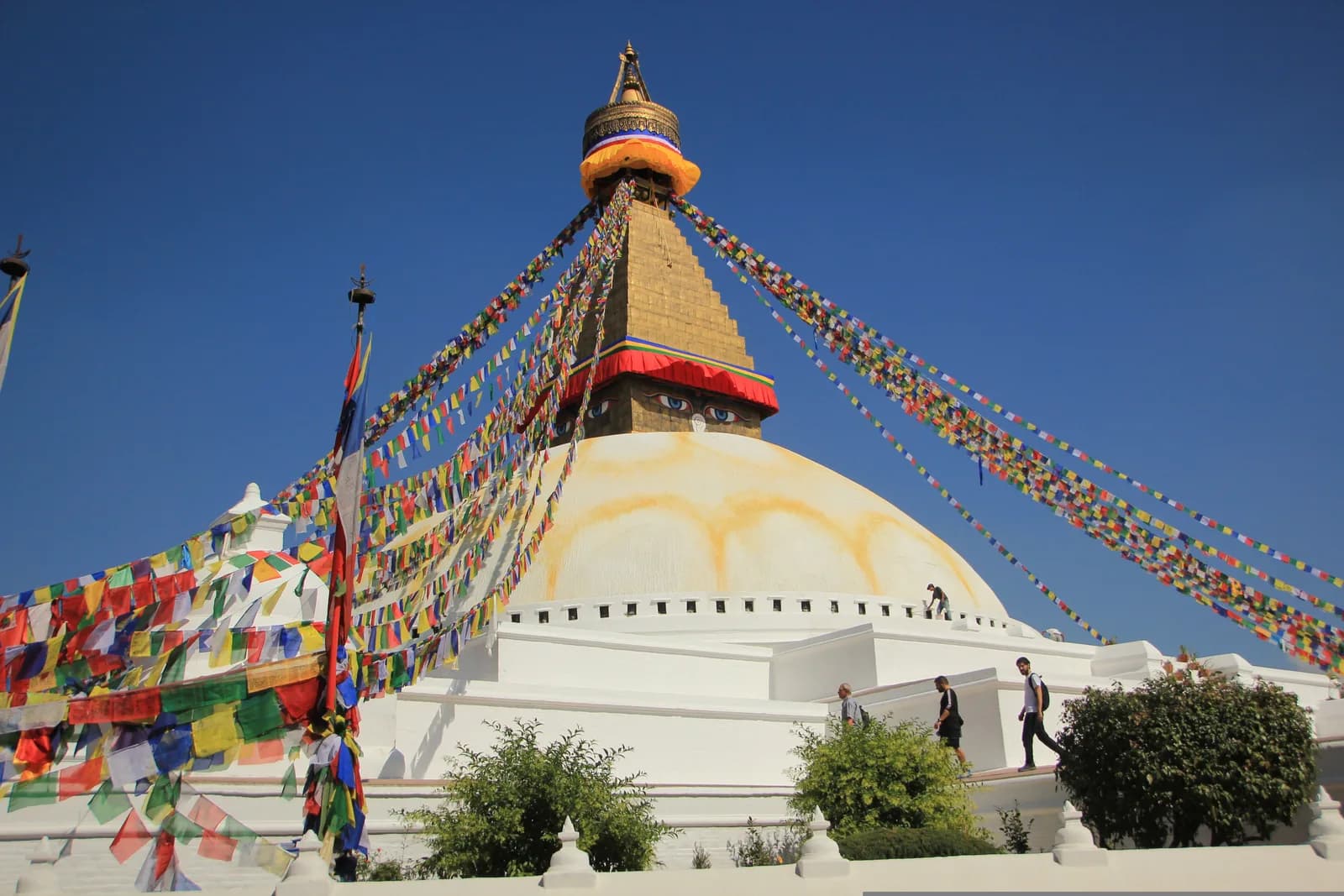
As its first stop: the day begins at Pashupatinath, then goes on to Guhyeshwari nearby, Boudhanath Stupa, the Sleeping Vishnu at Budhanilkantha and Swayambhunath.
You see the temple complex and the ghats in daylight, with time to walk around. The evening aarti is not part of the sacred heritage day.
It runs in a private vehicle with hotel pickup and drop-off, and lasts about eight and a half hours. The listing says it doesn’t suit pregnant women or wheelchair users, and asks that everyone comes sober.
For more days in and around the city, see things to do in Kathmandu.
A trip you can book
 KathmanduKathmandu’s Sacred Heritage & Spiritual WondersFull dayHotel pickupFull refund up to 24 hours beforefrom $38per vehicleSee the trip →
Questions travellers ask
Can you take photos of the Pashupatinath aarti?
Is there a night aarti after the evening one?
What happens at Pashupatinath in the morning?
How far is Pashupatinath from Thamel?
Is Guhyeshwari near Pashupatinath?
What happens at Pashupatinath on Maha Shivaratri?
Sources & checks
- Daily schedule (temple hours, morning puja, Mahabhishek, evening and night aarti), Hindus only in the main sanctum, photos, the cremation ghats among its services, taxi time from Thamel — Pashupati Area Development Trust · checked Oct 2026
- Visitor guide: who may enter, dress, shoes, photos during ceremonies, drones, watching the aarti from the eastern bank, Shayan puja, the last-rites service at Arya Ghat — Pashupati Area Development Trust · checked Oct 2026
- Puja rates — Pashupati Area Development Trust · checked Oct 2026
- Pashupatinath and Guhyeshwari: Hindus only, the terraces across the river, leather items, Shivaratri — Nepal Tourism Board · checked Oct 2026
- Entry fees: free for Indian nationals and Nepalis; SAARC and foreign nationals — Nepal Tourism Board · checked Oct 2026
- The sacred heritage day: its stops and their order, what is included and left out, dress, and who it is not suited to — The day's own listing on Day Trio · checked Oct 2026
- The evening aarti earlier in winter and later in summer; no photos inside the temple; the sacred heritage day running as normal on Maha Shivaratri — First-hand: the author and the operators who run this day · checked Oct 2026